
Heyl Neomeris Clinical Solutions – DI Water Systems for Safe Reprocessing in Medical Facilities
DI water as the foundation for safe reprocessing processes
A system for producing demineralized water (DI water) used as process water in medical reprocessing consists of several coordinated components. Modern water treatment systems ensure a reliable supply of high-quality process water for the reprocessing of medical devices in hospitals, sterile services departments (CSSD), outpatient practices and medical care centers (MVZ).
Professional guidelines increasingly recommend stricter limit values for water quality. Many hospital management teams and CSSD managers are already adapting their process water production to these new requirements. This not only increases legal security but also offers economic advantages by reducing damage to medical instruments, washer-disinfectors (WD) and sterilizers.
Limescale deposits, corrosion or silicate residues – common indicators of poor process water quality – occur significantly less frequently. At the same time, hygienic risks caused by microbial contamination or residues that could compromise successful sterilization and therefore patient safety are reduced.
Optimized water treatment for patient safety and efficient processes
In medical facilities, patient safety is always the highest priority. Modern and standards-compliant water treatment plays a crucial role in ensuring safe and reproducible reprocessing procedures. Only a water treatment system designed according to the latest state of technology can guarantee long-term legal security in the reprocessing of medical devices.
At the same time, facilities benefit operationally and economically. Optimized workflows, reduced damage to instruments and improved operational reliability lower costs and increase efficiency in daily operations. Furthermore, relieving staff through stable and reliable processes reduces stress and increases employee satisfaction.
Your benefits with Heyl Neomeris Clinical Solutions
- Modern DI water systems for medical facilities and laboratories
- Compliance with current requirements and guidelines for process water quality
- Reduced scaling, corrosion and damage to medical instruments
- Improved patient safety through stable and hygienic reprocessing processes
- More efficient workflows and reduced workload for staff
With Heyl Neomeris Clinical Solutions you benefit from reliable water treatment, optimized reprocessing processes and long-term operational reliability – ensuring safe instrument reprocessing and the highest quality standards in medical facilities.

The benefits of NeoDeWa 300 l/h – 200-litre tank The NeoDeWa water treatment system from HeylNeomeris, which features a modular design, supplies deionised water for the reprocessing of sterile medical devices in outpatient facilities. The focus is on bespoke design: every NeoDeWa system is tailored to local conditions and actual requirements. Factors such as the existing water quality, the water’s hardness and the required water volume are all taken into account in the planning. Any existing treatment stages carried out by the water supplier are also considered. Your benefits with NeoDeWa: Customised configuration according to the existing water quality System capacity tailored to actual water requirements Suitable for different levels of water hardness Flexible modular system for a customised configuration Compact design despite individual configuration The result is a water treatment system that is precisely tailored to the requirements of your outpatient treatment centre – efficient, space-saving and tailored to your needs. Deionised water treatment for outpatient care Why is deionised water required? Deionised water plays a vital role in the standard-compliant reprocessing of instruments and medical devices. Among other things, it is used to supply cleaning and disinfection units (CDUs) and sterilisers in instrument reprocessing and in laboratories. During complete desalination, minerals, salts and other undesirable substances in the water are largely removed. This helps to reduce deposits and residues on instruments and equipment. It helps to protect materials and creates the conditions necessary for a hygienically safe reprocessing process. Typical areas of application for deionised water include: outpatient surgical centres dental practices dermatology clinics endoscopy centres other facilities with their own instrument reprocessing units Reliable monitoring of water quality Consistently high water quality is a key aspect of the reprocessing of medical devices. Relevant water parameters can therefore be monitored continuously. This enables changes in water quality to be detected at an early stage and the reprocessing to be reliably controlled. Conductivity and silicate content are central to quality monitoring. Both parameters provide important indications of the quality of the treated water and help to reduce deposits and residues on instruments and equipment. The NeoDeWa Concept The NeoDeWa water treatment system combines all necessary treatment steps into a single modular system. Pre-filtration, softening, reverse osmosis, further treatment and quality monitoring are optimally coordinated. The components used depend on the local water quality, the actual water demand and the individual requirements of the facility. Thanks to its modular design, the system can also be expanded with additional components at any time. Components of the NeoDeWa water treatment system Depending on the specific design, the system may comprise the following components: System isolator to protect the drinking water network Pre-filters and activated carbon filters for targeted pre-treatment of the water Water softener to reduce water hardness Reverse osmosis system to remove the majority of dissolved substances from the wa-ter Permeate tank with a capacity of 100, 200 or 300 litres Pressure-boosting station for a reliable water supply Two-stage mixed-bed system for further treatment Conductivity measurement for continuous monitoring of water quality Testomat® 808 SiO₂ for monitoring the silicate content Circulation loop for circulating the water when there is no draw-off In addition, the system can be optionally expanded, for example to include: Aqua-Stop and drip tray UV system Pyrogen filter Brine pumping system NeoTecMaster Your benefit: a fully integrated system With NeoDeWa, outpatient facilities do not receive a system made up of unconnected individual components, but a holistically planned and fully integrated water treatment system – supplied entirely from a single source by HeylNeomeris. The modular design allows for precise adaptation to the existing water quality, individual water requirements and the specific needs of the facility. At the same time, the key water parameters remain reliably under control. Additional functions and components can be retrofitted as required. The result is a compact, flexible and tailor-made solution for a reliable deionised water supply in the outpatient sector. NeoDeWa Water Treatment System – Flexible capacity for varying requirements The capacity of the NeoDeWa water treatment system is tailored individually to the deionised water requirements of the respective facility. Various capacity levels are available for this purpose: 90 litres per hour 150 litres per hour 230 litres per hour 300 litres per hour The size of the permeate tank is also selected according to the required water volume. For systems with a capacity of more than 150 litres per hour, the permeate tank and pressure-boosting station are usually installed outside the cabinet system due to their dimensions. The specific configuration used depends on the conditions at the installation site. Compact and space-saving During the development of the cabinet system, particular emphasis was placed on minimising the space required. Together, the two cabinets require a footprint of just 1.60 m × 1.00 m. With a width of 80 cm each and a depth of 60 cm, the system can be used even where space is limited. The double-leaf doors swing out only slightly when opened, thereby facilitating access to the components. Robust for day-to-day use The cabinets are made of sturdy sheet steel and feature a high-quality, durable surface coating. This ensures that the cabinet system is designed for daily use in outpatient settings. NeoDeWa combines performance tailored to specific needs, compact dimensions and a robust design in a harmoniously integrated system. Integrated system separator to protect the drinking water supply A system separator is required to prevent treated water from flowing back into the drinking water supply. NeoDeWa already features an integrated Type BA system separator. This is located directly behind the optionally available Aqua-Stop at the water connection and ensures a secure separation between the water treatment system and the drinking water supply. Testomat® 808 SiO₂ for monitoring the silicate content The Testomat® 808 SiO₂ continuously monitors the silicate content of the treated water. This allows you to check whether the SiO₂ limit of 0.4 mg/l recommended by the DGSV and AKI is being adhered to. Continuous measurement provides transparency regarding an important water quality parameter and helps to identify potential problems caused by an elevated silicate content at an early stage. Continuous conductivity measurement The integrated conductivity measurement system on the second mixed-bed unit continuously monitors water quality within a measurement range of 0–10 µS/cm. A conductivity of < 1 µS/cm is recommended for the processing of medical devices. Continuous measurement enables immediate verification that this range is being maintained. Filter systems for reliable pre-treatment The pre-filter section consists of a pre-filter and an activated carbon filter. Both components serve to pre-treat the drinking water and protect the downstream water softener and reverse osmosis system from harmful substances in the water. In doing so, they create the conditions for reliable and long-lasting operation of the subsequent treatment stages. Water softener The water softener reduces water hardness by removing the hardness-causing elements calcium and magnesium from the drinking water and exchanging them for sodium ions. The ion-exchange process thus reduces the load on the downstream reverse osmosis system and protects its membranes from deposits and blockages. Reverse osmosis Reverse osmosis works by reversing the principle of natural osmosis. The softened water is forced under pressure through a semi-permeable membrane. In this process, mainly water molecules and very small molecules pass through the membrane, whilst salts, bacteria, viruses and larger particles are largely retained. The reverse osmosis system used in NeoDeWa achieves a retention rate of around 98 per cent in terms of dissolved substances in the water. Permeate tank A sturdy cylindrical tank is used to store the treated water. Its uniform shape facilitates efficient storage and makes cleaning easier. The optimised tank design is also intended to minimise areas where microbiological contamination is likely to develop. In this way, the tank contributes to the hygienic storage of the treated water. Pressure-boosting station The pressure-boosting station provides the required operating pressure and flow rate for the connected consumers. This ensures that the treated water is available to the connected consumers as and when required, at the necessary pressure levels. Two-stage mixed-bed system Further treatment is carried out by a two-stage mixed-bed system connected in series. The specially matched resins remove any dissolved substances remaining in the water after reverse osmosis. The reduction of silicates is of particular importance here, as these can lead to undesirable deposits during the processing of medical devices. If the optionally available buffer tank system is used, the mixed-bed system also handles the first stage of the recirculation process. Aqua-Stop with solenoid valve shut-off – optional The optional Aqua-Stop serves as an additional safety feature for the water supply. If a fault or leak is detected, it can automatically cut off the water flow. The Aqua-Stop is installed as the first component directly behind the system’s main water connection. Two sensors monitor for potential water leaks: one is located in the cabinet’s base tray, whilst the second is situated outside the cabinet at the level of the permeate tank and pressure-boosting station. An integrated drip tray collects any water that escapes. Together with the Aqua-Stop, it provides an additional layer of safety for the cabinet system. UV system for water disinfection – optional NeoDeWa can be optionally fitted with a UV system for water disinfection. The water is treated with UV-C radiation to reduce the proliferation or contamination caused by microorganisms. Depending on the system configuration, this can inactivate bacteria, viruses and protozoa, amongst others. The UV treatment is carried out without the addition of chemical disinfectants. Pyrogen filter – optional An optional pyrogen filter is used for the targeted removal of pyrogens from the water. These are substances that can trigger immunological reactions in the human body. Relevant pyrogens include, in particular, endotoxins, which can be released, for example, by Gram-negative bacteria such as Escherichia coli (E. coli). Wastewater discharge via a wastewater lifting system – Option For installation sites without adequate free wastewater drainage, NeoDeWa can be optionally fitted with a wastewater lifting system. This collects the wastewater produced and discharges it into the sewerage system. The main volumes of wastewater are generated during the regeneration of the water softener and from the concentrate produced by the reverse osmosis system. NeoTecMaster® 5-inch with housing – optional A modern water treatment system generates a wide range of relevant process data. To record, visualise and process this data, NeoDeWa can be optionally fitted with the NeoTecMaster®. This manufacturer-independent multi-parameter system enables the networking of different measurement systems and their integration into process automation. This allows relevant operational and quality data to be recorded centrally and presented clearly. One system, many possibilities From pre-treatment through softening and reverse osmosis to further treatment and continuous quality monitoring: NeoDeWa combines the individual process steps into a modular complete system. The capacity and configuration are tailored to actual requirements and on-site conditions. Additional components can be added as required – for deionised water treatment that can be flexibly integrated into a variety of outpatient facilities.
The benefits of NeoDeWa 300 l/h – 300-litre tank The NeoDeWa water treatment system from HeylNeomeris, which features a modular design, supplies deionised water for the reprocessing of sterile medical devices in outpatient facilities. At the heart of the system is bespoke design: every NeoDeWa system is individually tailored to local conditions and actual requirements. Factors taken into account in the design include the existing water quality, the degree of hardness and the required water volume. Existing treatment stages provided by the water supplier are also taken into consideration. Your benefits with NeoDeWa: Customised configuration to suit the existing water quality System capacity tailored to actual water requirements Suitable for use with different levels of water hardness Flexible modular system for a needs-based configuration Compact design despite customised configuration The result is a water treatment system that is precisely tailored to the requirements of your outpatient treatment centre – efficient, space-saving and needs-based. Deionised water treatment for outpatient care Why is deionised water required? Deionised water is a key component in the standard-compliant reprocessing of instruments and medical devices. It is used, amongst other things, to supply cleaning and disinfection units (CDUs) and sterilisers in instrument reprocessing, as well as in laboratories. During the deionisation process, minerals, salts and other undesirable substances are largely removed from the water. This reduces deposits and residues on instruments and equipment, protects materials and lays the foundation for a hygienically safe reprocessing process. Typical areas of application for deionised water: outpatient surgical centres dental practices dermatology centres endoscopy centres other facilities with their own instrument reprocessing Reliably monitoring water quality Consistently high water quality is essential for the reprocessing of medical devices. Relevant water parameters can therefore be continuously monitored, enabling changes to be detected at an early stage and the reprocessing to be reliably controlled. Conductivity and silicate content are of particular importance here. Both parameters provide important information about the quality of the treated water and help to prevent deposits and residues on instruments and equipment. The NeoDeWa concept The NeoDeWa water treatment system combines all the necessary treatment stages into a single modular system. Pre-filtration, water softening, reverse osmosis, further treatment and quality monitoring are optimally integrated. The components used depend on the local water quality, actual demand and the individual requirements of the facility. The modular design also allows for the addition of further components at any time. Components of the NeoDeWa water treatment system Depending on the specific design, the system may include the following components: System isolator to protect the drinking water network Pre-filters and activated carbon filters for targeted pre-treatment of the water Water softener to reduce water hardness Reverse osmosis system to remove the majority of dissolved substances Permeate tank with a capacity of 100, 200 or 300 litres Pressure-boosting station for a reliable water supply Two-stage mixed-bed system for further treatment Conductivity measurement for continuous monitoring of water quality Testomat® 808 SiO₂ for monitoring the silicate content Circulation loop for circulating the water when there is no draw-off The system can also be optionally expanded to include, for example: Aqua-Stop and drip tray UV system Pyrogen filter Brine pumping system NeoTecMaster Your benefit: a fully integrated system With NeoDeWa, outpatient facilities do not receive a hodgepodge of unconnected individual components, but a holistically planned, fully integrated water treatment system for medical use – supplied entirely from a single source by HeylNeomeris. The modular design allows for precise adaptation to the existing water quality, individual needs and the specific requirements of the facility. At the same time, the key water parameters remain reliably under control, and additional functions can be retrofitted at any time as required. The result: a compact, flexible and needs-based solution for a reliable deionised water supply in the outpatient sector. NeoDeWa Water Treatment System – Flexible capacity for varying requirements The capacity of the NeoDeWa water treatment system is tailored individually to the deionised water requirements of the respective facility. Various capacity levels are available for this purpose: 90 litres per hour 150 litres per hour 230 litres per hour 300 litres per hour The size of the permeate tank also depends on the required water volume. For capacity levels above 150 litres per hour, the permeate tank and pressure-boosting station are usually placed outside the cabinet system due to their dimensions. The specific configuration used depends on the on-site conditions. Compact and space-saving During the development of the cabinet system, particular emphasis was placed on minimising the space required. Together, the two cabinets require a footprint of just 1.60 m × 1.00 m. With each cabinet measuring 80 cm in width and 60 cm in depth, the system is also suitable for confined spaces. The double-leaf doors open only slightly outwards, thus facilitating access to the components. Robust for day-to-day use The cabinets are made of sturdy sheet steel with a high-quality, durable surface coating – designed for long-term use in everyday outpatient practice. NeoDeWa combines performance tailored to your needs, compact dimensions and a robust design in a seamlessly integrated system. Integrated system separator to protect the drinking water supply A system separator is required to prevent treated water from flowing back into the drinking water supply. NeoDeWa comes with an integrated Type BA system separator as standard. It is located directly behind the optionally available Aqua-Stop at the water connection and ensures a secure separation between the water treatment system and the drinking water supply. Testomat® 808 SiO₂ for monitoring the silicate content The Testomat® 808 SiO₂ continuously monitors the silicate content of the treated water, thereby enabling verification of compliance with the SiO₂ limit of 0.4 mg/l recommended by the DGSV and AKI. Continuous measurement provides transparency regarding this important quality parameter and helps to identify at an early stage any potential adverse effects caused by an elevated silicate content. Continuous conductivity measurement The integrated conductivity measurement at the second mixed-bed unit continuously monitors water quality within a measurement range of 0–10 µS/cm. A conductivity of < 1 µS/cm is recommended for the processing of medical devices. Continuous measurement allows for immediate verification of whether this value is being maintained. Filter systems for reliable pre-treatment The pre-filter section consists of a pre-filter and an activated carbon filter. Both serve to pre-treat the drinking water and protect the downstream water softener and reverse osmosis system from harmful contaminants. In doing so, they lay the foundation for reliable and long-lasting operation of the subsequent treatment stages. Water softener The water softener reduces water hardness by removing the hardness-causing elements calcium and magnesium from the drinking water and replacing them with sodium ions. The ion-exchange process thus reduces the load on the downstream reverse osmosis system and protects its membranes from deposits and blockages. Reverse Osmosis Reverse osmosis reverses the principle of natural osmosis: the softened water is forced under pressure through a semi-permeable membrane. In this process, mainly water molecules and very small molecules pass through the membrane, whilst salts, bacteria, viruses and larger particles are largely retained. The reverse osmosis system used in NeoDeWa achieves a retention rate of around 98 per cent with regard to dissolved substances in the water. Permeate tank A sturdy cylindrical tank is used to store the treated water. Its uniform shape promotes efficient storage and facilitates cleaning. The optimised tank design is also intended to minimise areas where microbiological contamination is likely to form – thereby contributing to hygienic storage. Pressure-boosting station The pressure-boosting station provides the required operating pressure and flow rate for the connected consumers. This ensures that the treated water is available to the connected consumers as and when required, at the necessary pressure levels. Two-stage mixed-bed system Further treatment is carried out by a two-stage mixed-bed system connected in series. The carefully matched resins remove any dissolved substances still present in the water following reverse osmosis. The reduction of silicates is of particular importance here, as these can lead to undesirable deposits during the processing of medical devices. If the optionally available buffer tank system is used, the mixed-bed system also handles the first stage of the recirculation process. Aqua-Stop with solenoid valve shut-off – optional The optional Aqua-Stop acts as an additional safety device for the water supply and can automatically cut off the water flow if a fault or leak is detected. It is installed as the first component directly behind the system’s main water connection. Two sensors monitor for potential water leaks: one in the cabinet’s base tray, and the second outside the cabinet at the level of the permeate tank and pressure-boosting station. An integrated drip tray collects any leaking water and, together with the Aqua-Stop, provides an additional layer of safety for the cabinet system. UV system for water disinfection – optional NeoDeWa can be optionally fitted with a UV system for water disinfection. The water is treated with UV-C radiation to reduce the proliferation or contamination caused by microorganisms. Depending on the configuration, this can inactivate bacteria, viruses and protozoa, amongst others – the UV treatment takes place entirely without the addition of chemical disinfectants. Pyrogen filter – option An optional pyrogen filter is used for the targeted removal of pyrogens from the water – substances that can trigger immunological reactions in the human body. Relevant pyrogens include, in particular, endotoxins, which can be released, for example, by Gram-negative bacteria such as Escherichia coli (E. coli). Wastewater discharge via brine lifting system – Option For installation sites without adequate free wastewater drainage, NeoDeWa can be optionally fitted with a wastewater lifting system that collects the wastewater produced and feeds it into the sewerage system. The main volumes of wastewater are generated during the regeneration of the water softener and from the reverse osmosis concentrate. NeoTecMaster® 5-inch with housing – option Modern water treatment generates a wide range of relevant process data. For the recording, visualisation and processing of this data, NeoDeWa can be optionally fitted with the NeoTecMaster®. This manufacturer-independent multi-parameter system enables the networking of different measurement systems and their integration into process automation, allowing relevant operational and quality data to be recorded centrally and presented clearly. One system, many possibilities From pre-treatment through water softening and reverse osmosis to further treatment and continuous quality monitoring: NeoDeWa combines the individual process steps into a single modular system. The capacity and configuration are tailored to actual requirements and on-site conditions. Additional components can be added as required – for deionised water treatment that can be flexibly integrated into a variety of outpatient facilities.
The benefits of NeoDeWa 90 l/h - 100 l Tank The NeoDeWa water treatment system from HeylNeomeris, which features a modular design, supplies deionised water for the reprocessing of sterile medical devices in outpatient facilities. The major advantage: the system can be individually adapted to on-site conditions. Factors such as the existing water quality, water hardness and water demand are taken into account. Existing treatment stages provided by the water supplier can also be incorporated into the planning. Your benefits at a glance: Individually adaptable to the existing water quality Designed to meet actual water demand Flexible use across different levels of water hardness Modular design enables configuration tailored to requirements Consistently compact design despite customisation This provides you with a water treatment solution that is specifically tailored to the requirements of your outpatient treatment centre. Deionised water treatment for outpatient care Why is deionised water required? Fully deionised water, or deionised water for short, is an important component in the reprocessing of medical instruments and medical devices. It is required, for example, to supply RDGs and Steris in instrument reprocessing or in laboratory applications. The treatment process removes minerals, salts and other undesirable components from the water. This helps to reduce residues and deposits on instruments and equipment and supports a reprocessing method that is gentle on materials and hygienically safe. Deionised water is used, amongst other places, in: outpatient surgical centres dental practices dermatology clinics endoscopy centres other facilities with instrument reprocessing units Reliable monitoring of water quality Consistently high water quality is particularly important for the processing of medical devices. That is why key water parameters can be monitored continuously. These include, in particular, conductivity and silicate content. They provide an indication of the quality of the treated water and help to prevent unwanted residues and deposits. The NeoDeWa Concept The NeoDeWa water treatment system combines the necessary treatment steps into a modular, integrated system. From pre-filtration and softening, through reverse osmosis, to further treatment and monitoring of water quality, the individual components are coordinated with one another. Depending on the facility’s requirements, the system can be individually configured and expanded to include additional components. Components of the NeoDeWa water treatment system Depending on the model, the system includes: A system isolator to protect the drinking water supply Pre-filters and activated carbon filters for pre-treatment of the water A water softener to reduce water hardness Reverse osmosis unit to remove the majority of dissolved substances from the water Permeate tank with a capacity of 100, 200 or 300 litres Pressure-boosting station for a reliable water supply Two-stage mixed-bed system for further water treatment Conductivity measurement to monitor water quality Testomat® 808 SiO₂ for monitoring the silicate content Circulation loop for water circulation when there is no consumption by end-users Optionally, the system can be further equipped with: Aqua-Stop and drip tray UV system Pyrogen filter Brine pumping system NeoTecMaster Your benefit: a fully integrated system With the NeoDeWa VE water treatment system, outpatient facilities receive not just individual components, but a fully integrated water treatment system – all from a single source: HeylNeomeris. The modular design makes it possible to adapt the system to water quality, water demand and the facility’s individual requirements. At the same time, key parameters can be monitored and additional functions integrated as required. This results in a compact and tailor-made solution for the reliable supply of deionised water in the outpatient sector. NeoDeWa Water Treatment System – Flexible capacity for varying requirements The NeoDeWa water treatment system can be adapted to the facility’s specific deionised water requirements. Depending on the model, different capacity options are available: 90 litres per hour 150 litres per hour 230 litres per hour 300 litres per hour The size of the permeate tank can also be selected to suit the required water volume. For larger systems with a capacity of more than 150 litres per hour, the permeate tank and pressure-boosting station are usually installed outside the cabinet system due to their dimensions. The exact configuration depends on the conditions on site. Compact and space-saving The cabinet system has been designed to take up as little space as possible. A floor area of just 1.60 m × 1.00 m is required to accommodate the two cabinets. Each cabinet is 80 cm wide and 60 cm deep. The double doors require very little additional space when opened. This makes the system suitable even for areas where space is limited. Robust and designed for daily use The cabinets are made of sturdy sheet steel and feature a high-quality, durable surface coating. The NeoDeWa cabinet system thus combines flexible performance, compact dimensions and a robust construction in a solution tailored to the specific application. Shut-off via a system separator To protect the drinking water supply, it is essential to prevent treated water from flowing back into the drinking water mains and thereby compromising the quality of the drinking water. A so-called system separator is therefore required. The system is already fitted with an integrated system separator, type BA. This is located directly behind the optionally available Aqua-Stop on the water connection and ensures a secure separation between the drinking water mains and the system. Testomat® 808 SiO₂ silicate analyser A Testomat® 808 SiO₂ silicate analyser is used for continuous silicate monitoring. The Testomat® 808 SiO₂ is a measuring instrument used to determine the silicate content in water. The use of the Testomat® 808 SiO₂ ensures reliable compliance with the limit value of 0.4 mg/l for SiO₂ recommended by the DGSV and AKI. Conductivity measurement The integrated conductivity measurement provides continuous monitoring of conductivity in the range of 0–10 μS/cm at the second mixing bed. For the reprocessing of medical devices, a conductivity of <1 µS/cm is recommended for the water used in the cleaning, disinfection and sterilisation processes. Compliance with this limit is continuously monitored. Filter systems The pre-filter section is a filter unit comprising a pre-filter and an activated carbon filter. Its main purpose is to protect downstream water softeners and reverse osmosis systems, which could be damaged by impurities in the water. Water softener The water softener removes hardness minerals (calcium and magnesium) from the drinking water and replaces them with sodium. It operates on the principle of ion exchange and ensures that the reverse osmosis membranes are reliably protected against blockages. Reverse Osmosis Reverse osmosis reverses the natural osmotic process. In this process, the softened water is forced under pressure through a membrane, which allows only water molecules and very small molecules to pass through whilst retaining larger particles such as salts, bacteria, viruses and other contaminants. The reverse osmosis system installed has a retention rate of approximately 98 per cent, based on all substances dissolved in the water. Permeate tank The built-in cylindrical tank offers advantages in terms of stability, cleaning and space requirements. Its uniform shape ensures that the water is treated and stored efficiently. The optimised tank geometry prevents the potential growth of microbiological contamination and thus goes a long way towards meeting the high standards required for media purity. Pressure-boosting station The pressure-boosting station ensures that the connected consumers are supplied with the required operating pressure and necessary flow rate. This enables an optimised and demand-driven supply of media. Two-stage mixed-bed system The two-stage (series-connected) mixed-bed system acts as a so-called ‘polisher’. Thanks to the special composition of the resin contained in the cartridges, all dissolved substances remaining in the water are reliably removed. The resin used is highly effective against silicates, which have a particularly adverse effect on the processing of medical devices. The mixed-bed unit also serves as the first stage of the recirculation process when the optionally available buffer tank system is used. Aqua-Stop (solenoid valve shut-off) – optional An Aqua-Stop is a safety mechanism used in water supply systems to stop or limit the flow of water in the event of a fault or a leak. The Aqua-Stop is positioned directly as the first component after the system’s main water connection. The associated solenoid valve is linked to two sensors, one of which is integrated into the cabinet’s base tray and the other is located externally at the level of the tank and the pressure-boosting station. The integrated drip tray serves to detect leaks and thus acts as a safety feature; it forms an integral part of the cabinet systems in combination with the Aqua-Stop. UV water disinfection system – optional The development of water disinfection using UV irradiation has made significant progress in recent years due to its simplicity and efficiency. The UV-C rays generated, which are significantly more intense than sunlight, are therefore used to disinfect water in order to combat bacterial contamination. They enable the removal of Legionella, microbes, bacteria, viruses and protozoa, whilst being environmentally friendly. Pyrogen filter – option A pyrogen filter is a specialised type of filter used in water treatment to remove pyrogens from the water. Pyrogens are substances that can trigger an immunological reaction in the body, in particular a rise in body temperature. These are usually endotoxins released by bacteria such as Escherichia coli (E. coli). Wastewater discharge via brine lifting system – option As an optional component, the treatment plant can be expanded to include an integrated wastewater lifting system, which conveys the wastewater produced and collected into the sewerage system. The main wastewater flow streams here are the wastewater from the regeneration of the water softener and the concentrate from the reverse osmosis system. NeoTecMaster® 5-inch with housing – Option Data acquisition, visualisation and processing are just some of the key aspects of modern water treatment. The networking of a wide variety of measurement systems and their integration into process automation is a fundamental component of this. The NeoTecMaster® was developed specifically for this task and is a manufacturer-independent multi-parameter system.

Under-sink system– Compact Solutions for Pure Water Quality Undercounter systems are space-saving, efficient water treatment solutions designed for discreet installation beneath work surfaces. They are indispensable in sensitive environments such as medical technology, laboratory furniture, dental clinics, and the MedTec industry. These systems reliably deliver purified water – demineralized (DI) water – exactly where it's needed. Advantages of Under-sink system: Compact design for integration into furniture and workspaces Easy to incorporate into existing supply systems Reliable multi-stage water purification Hygienic dispensing options for medical applications Example from the HeylNeomeris Range: NeoPureMini – Multi-Stage Under-sink Diluat System Pre-assembled on a stable frame and ready to connect, the NeoPureMini is ideal for installation under lab benches, in dental offices, or in medical furniture modules. With multi-stage filtration (including activated carbon, fine filtration, and optional UV stage), it provides high-purity DI water for stringent hygiene requirements in the sterilization of medical instruments in outpatient centers, operating rooms, and clinics.

Our 4- or 8- channel system allows the processing of up to four or eight measurement signals. For this purpose, 4-20 mA/ RS232 as well as Modbus RTU are available as signal inputs. Based on the received data a visualization as well as a trend display takes place. Through modular addition of optional modules (slaves) the realization of popular control concepts is possible.Advantages:Simple operation Integration of the Testomat® device world Integration into the existing control cabinet, alternatively we offer our NeoTecMaster® housingModular function range expandable by NeoTec slave modules (measure, control, control)Available as installation variant or structure variant Contents: NeoTecMaster® 5 inch - 4 channel system (optionally expandable to 8 channels) with Modbus interface and RS232 input for data communicationNeoTec Slave 4-20mA module (inputs: 8x 20mA)NeoTecMaster® IP66 housing for 5" display, light grey with front foilUSB stick for NeoTecMaster® 8GBInstallation of NeoTecMaster® in housing incl. parameterisation and cabling of the NeoTecMaster®Universal power supply 24V/6A DC (100-240V AC) (144 Watt)

The housing for holding the master or display unit as well as up to 6 function modules incl. optimized cable routing for connecting the individual components & PG glands for connecting external cables (e.g. for Ethernet, sensors and measurement technology). The advantages at a glance: Increase of the protection class to IP 66 and thus protection of the components against damage by environmental conditions. Optimized access for the cabling of the connected components.

Pyrogen filter A pyrogen filter is a special type of filter used in water treatment to remove pyrogens from the water. Pyrogens are substances that can cause an immunological reaction in the body, in particular an increase in body temperature. These are usually endotoxins released by bacteria such as Escherichia coli (E. coli). The pyrogen filter consists of a filter element with a very fine pore size and an associated filter housing. The pyrogen filter is available with filter elements of 0.05, 0.1 or 0.2 micrometres, which you can select as required. This enables the filter to effectively retain particles and microorganisms, including pyrogenic bacteria that may be present in the water. In the modular water treatment plant, the pyrogen filter is used after other pre-treatment stages such as filtration and disinfection. After the water has been purified of particles and microorganisms, it is passed through a pyrogen filter to remove any pyrogens. Pyrogen filters are particularly important in industries where pyrogen-free water is crucial, such as in outpatient care, to ensure the optimal quality of surgical instruments. Overall, pyrogen filters play an important role in water treatment to ensure the quality and purity of the water and minimise potential exposure to pyrogenic substances.

The pyrogen filtration system for producing pyrogen-free water using the mixed-bed process offers an impressive combination of a 5 µm pre-filter and a high-precision 0.05 µm filter for the reliable removal of pyrogens – ideal for pharmaceutical, medical and analytical applications. The design, which can be installed directly at the outlet of the mixed-bed system and is resistant to deionised water, ensures long-lasting, safe operation and, thanks to efficient pre-filtration, provides reliable protection against premature wear. Buy the filter system online now and benefit from maximum process reliability – including clear maintenance recommendations for consistently high water quality. The pyrogen filter system is supplied with all necessary installation materials, such as pressure hoses and fittings for the booster pump. The filter system is designed to produce pyrogen-free water. To protect the pyrogen filter, a sediment filter (filter rating: 5 micrometres) is fitted upstream of it. The pyrogen filter has a filter rating of 0.05 micrometres. The system is installed directly at the outlet of the mixed-bed system and, thanks to its components that are resistant to deionised water, is ideally suited for long-term use. Pre-filter (sediment filter) The sediment filter acts as a pre-filtration stage and protects the downstream pyrogen filter from resin abrasion from the mixed-bed cartridge, thereby preventing premature wear. Pressure booster pump: The pressure booster pump included in the package is connected upstream of the mixing bed to compensate for pressure loss caused by the mixing bed and the filtration elements for the downstream components, and to ensure an optimal supply of deionised water to the connected equipment. Pyrogen filter The pyrogen filter in its stainless steel housing provides a fine filtration stage and is designed to remove pyrogens (e.g. endotoxins), which are of particular critical importance in pharmaceutical, medical and analytical applications. Maintenance recommendation The filters should be inspected after three months and replaced after six months at the latest to ensure a safe process. For continuous operation, it is recommended to keep one sediment filter element (item number: 882088) and one pyrogen filter element (item number: 896493) in stock at all times. Note: Should failures occur in the connected downstream equipment during operation, the filter elements must be checked immediately and replaced if necessary. Deposits on the filter surface can lead to blockage of the filter elements. Frequently Asked Questions What is the pyrogen filter system used for? It produces exceptionally pure, pyrogen-free water following the mixed-bed system. How is the filter system constructed? It combines a 5 µm pre-filter with a 0.05 µm fine filter. Which substances are reliably removed? Primarily pyrogens such as endotoxins, as well as coarse particles and impurities. Pre-filter (sediment filter) The sediment filter acts as a pre-filtration stage and protects the downstream pyrogen filter from resin abrasion from the mixed-bed cartridge, thereby preventing premature wear. Pyrogen filter The pyrogen filter in a stainless steel housing acts as a fine filtration stage and serves to remove pyrogens (e.g. endotoxins), which are particularly critical in pharmaceutical, medical and analytical applications. Where is the system installed? Directly at the outlet of the mixed-bed system. What role does the booster pump play? It ensures stable pressure and a consistent water supply to the equipment. How often do the filters need to be changed? Check after three months and replace after six months at the latest. What happens in the event of a sudden drop in performance? The filters should be checked immediately and replaced if necessary.
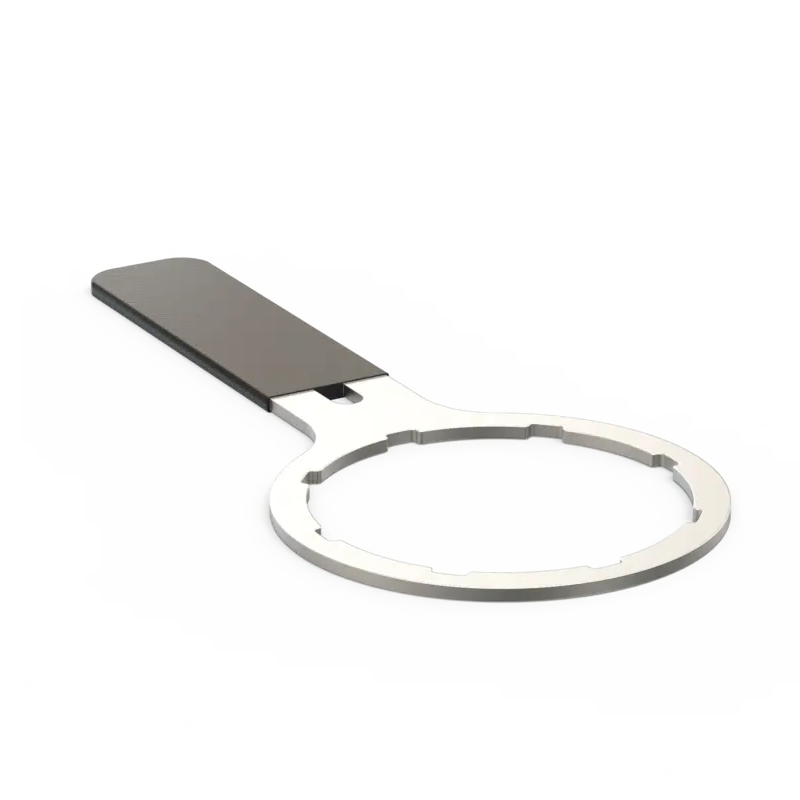
The ring spanner is used to open the housing of the pyrogen filter line so that the filter element can be replaced. The ring spanner is used for safely opening and closing the housing. It enables easy and reliable handling during maintenance, especially when changing filters. Its precise shape ensures optimal torque transfer and prevents damage to the housing. Using the ring spanner ensures a quick and efficient filter change, contributing to the maintenance of the system’s flawless operation.

Proposed use: for the regeneration of water softeners Composition: evaporated salt (min. 99.9% NaCl) Dimensions / weight of tablet: ø25mm / 14g Moisture content: < 0.08 Filling weight: 10kg per sack Type of packaging: PE film Storage description: store dry and well closed Certifications: ISO 9001, ISO 14001 and IFS Standard: The product complies with the following standards. EN 973:2009 Products for the treatment of water intended for human consumption - Sodium chloride for regenerating ion exchange resins -Type A EN 16401:2013 Products for the treatment of swimming pool water - Sodium chloride for use in electrochemical chlorine production plants - Type A EN 14805:2022 Products for the treatment of water intended for human consumption - Sodium chloride for on-site electrochemical production of chlorine by membrane-free processes - Type 1 EN 16370:2022 Products for the treatment of water intended for human consumption - Sodium chloride for the on-site electrochemical production of chlorine by means of membrane cells - Quality 2 Purchase options: Single purchase: 1x 10kg sack (Art.-No. 896467) Pallet purchase: 100x 10kg sacks (Art.-No. 896498) Frequently Asked Questions What are the salt tablets used for? To regenerate water softening systems whilst they are in operation. What is the quality of the salt? It consists of high-purity evaporated salt containing at least 99.9% sodium chloride. In what packaging is it supplied? In a handy 10 kg bag made of PE film. How should the product be stored? In a dry place and kept tightly sealed. Which standards does the salt meet? It complies with several EN standards for water treatment and chlorine generation. What certifications are available? ISO 9001, ISO 14001 and IFS for tested quality and safety. What applications is the product suitable for? For water softening as well as technical and hygiene-sensitive applications. What is the advantage of the 10 kg pack? It is easy to handle and ideal for smaller consumption volumes.

Proposed use: for the regeneration of water softeners Composition: evaporated salt (min. 99.9% NaCl) Dimensions / weight of tablet: ø25mm / 14g Moisture content: < 0.08 Filling weight: 25kg per sack Type of packaging: PE film Storage description: store dry and well closed Certifications: ISO 9001, ISO 14001 and IFS Standard: The product complies with the following standards... EN 973:2009 Products for the treatment of water intended for human consumption - Sodium chloride for regenerating ion exchange resins -Type A EN 16401:2013 Products for the treatment of swimming pool water - Sodium chloride for use in electrochemical chlorine production plants - Type A EN 14805:2022 Products for the treatment of water intended for human consumption - Sodium chloride for on-site electrochemical production of chlorine by membrane-free processes - Type 1 EN 16370:2022 Products for the treatment of water intended for human consumption - Sodium chloride for the on-site electrochemical production of chlorine by means of membrane cells - Quality 2 Purchase options: Single purchase: 1x 25kg sack (Art.-No. 896468) Pallet purchase: 40x 25kg sacks - 1000 kg (Art.-No. 896500) Frequently Asked Questions What are the salt tablets used for? For regenerating water softening systems. What exactly is the quality of the salt? It consists of high-purity evaporated salt containing at least 99.9% sodium chloride. In what packaging is the product supplied? In 25 kg bags made of protective PE film. How should the salt be stored? In a dry place and kept tightly sealed. Which standards does the product meet? It complies with several EN standards for water treatment and chlorine generation. What certifications are available? ISO 9001, ISO 14001 and IFS for verified quality and safety. For which applications is this salt suitable? For water softeners and technical water treatment systems. What distinguishes this variant from larger containers? It is designed as a more manageable unit for more flexible use.

The sediment filter element for the Neomeris pyrogen filter system is a high-performance pre-filter that reliably removes coarse contaminants such as sand, rust, dust, and resin abrasion. This significantly increases the efficiency and service life of downstream filter systems. As an essential first stage of filtration, it protects the pyrogen filter from wear, ensures consistently high water quality, and is particularly suitable for applications where clean, treated water is crucial. Buy online now and benefit from easy installation, high compatibility (with item no. 882087), and straightforward, regular replacement for consistently optimal filtration. The sediment filter element is a key component of the Neomeris pyrogen filtration system and acts as the first stage of protection in the multi-stage filtration process. It is designed to reliably remove coarse contaminants in order to improve the service life and efficiency of the subsequent filtration stage. What is the sediment filter element used for? Function and performance The sediment filter acts as a pre-filter and protects the downstream pyrogen filter from resin abrasion from the mixed-bed cartridge and from premature wear. With its coarse micron rating, the sediment filter element reliably retains sand, dust, rust particles, resin abrasion, and similar contaminants. This first filtration stage is crucial as it prevents larger dirt particles from damaging or impairing the finer filter elements in the subsequent stages. Product benefits: Reliable sediment pre-filter for the Neomeris pyrogen filtration system Efficient first filtration stage: Removes coarse particles such as sand, dust, rust, resin abrasion from the mixed-bed cartridge, etc. Regular replacement required: Ensures consistent water quality and protects the system Easy integration: Can be easily integrated into the Neomeris pyrogen filter system Maintenance and replacement To ensure optimum performance and the best possible water quality, it is important to replace the sediment filter element regularly. The filters should be checked after three months and replaced after six months at the latest to ensure safe operation. Compatibility and installation The sediment filter element is suitable for replacement in the Neomeris pyrogen filter line (item number: 882087). Changing the filter is simple and can be carried out without specialist knowledge, thereby reducing maintenance requirements and improving user-friendliness. Frequently Asked Questions What is the role of the sediment filter element in the system? It removes coarse particles before the water undergoes further purification. Why is this pre-filter so important? It protects the downstream filters from premature wear. What substances does the element filter out of the water? Sand, rust, dust and fine particles such as resin abrasion. How often should the filter be replaced? At least every six months, to ensure water quality. Is replacement complicated? No, replacement is simple and requires no specialist knowledge. Which system is the filter compatible with? With the Neomeris pyrogen filter system (item no. 882087). How does the filter improve the overall system? This first filtration stage is crucial, as it prevents larger particles of dirt from damaging or impairing the finer filter elements in the subsequent stages. This increases the service life and stability of the entire filter system.

Testomat 808: Continuous Hardness Limit Monitoring Online measurement of residual water hardness with automatic color change Measurement Principle and Technical Features Modern indicator pump system supporting an automated process with minimal reagent and water consumption. Internal and external flushing options, manual safety check for up to 72 hours of unattended operation (BOB operation), and interfaces for 4–20 mA signals and RS232 firmware updates. Purchase Benefits 3% shop discount when purchasing a Testomat 808 Free of charge: original Heyl indicator for hardness measurement Frequently asked questions How long is the warranty for Testomat devices? The manufacturer's warranty period for the Testomat device series from Heyl is two years from the date of delivery. Where can I view or download the operating instructions? The operating instructions are included with the Testomat upon delivery and can be downloaded at any time from our online shop under the menu item – Service/Help – Download Operating Instructions. Can the warranty be extended? A warranty extension to three years is possible for a newly purchased device if a subscription for the corresponding indicator delivery is taken out. The subscription can be taken out easily and conveniently in the customer account under Subscriptions. The device warranty is extended from 24 months to 36 months after taking out the subscription. The prerequisite for this is that the subscription is taken out within 3 months of the purchase date. A subsequent warranty extension is not possible. Does the Testomat 808 have different spare parts and service sets to the Testomat 808 SiO2? Yes, there are some differences. More detailed information on the individual parts can be found in the operating instructions under ‘Spare Parts List’. How high are the follow-up costs for chemicals? The necessary use of indicators depends on the measurement intervals, which can be set via the device. The actual chemical consumption can be determined independently and individually for the respective application using our indicator or reagent consumption calculator in the shop. Indicators consumption calculator Reagent Consumption Calculator How often does the Testomat 808 need to be serviced? According to the manufacturer, regular maintenance is recommended. The recommended maintenance interval is between 6 and 12 months. Can the device be serviced by a service partner? With our nationwide service partner network, we can arrange for maintenance to be carried out by one of our service partners in Germany and Austria at any time. Please send us your enquiry to vertrieb@heylneomeris.de. Can the device be sent in for repair (cost estimate)? Of course, we at HeylNeomeris offer a repair service. To do this, we need the completed checklist from the operating instructions. The maintenance request can be sent to vertrieb@heylneomeris.de. If you have any further questions, please contact our service team on the service hotline +49 (0) 5121 7609 99.


The Testomat® 808 is a compact analyser for online measurement of water hardness according to the principle of "limit value monitoring with colour change" in the measuring range 0.02 - 5 ° dH (0.4 - 89 ppm). Applications of the continuous residual hardness monitoring are e.g.: Reverse osmosis systems, boiler feed water supply Soft water for commercial purposes, ultrapure water systems. In view of the fact that the Testomat® 808 is suitable for use in multi-parameter systems due to its 4-20mA signal output, we hereby offer you the Testomat® 808 in conjunction with the NeoTecMaster® Multicontroller, which was specially developed by our company, as a package solution at a preferential price. The 4-channel NeoTecMaster® Multicontroller included in this package enables the processing of up to four measurement signals. Via the 4-20mA NeoTec slave input module connected to the NeoTecMaster®, the data is transmitted to the NeoTecMaster® and used to display the measured value, the trend and the status messages on the 5-inch screen. In addition, the NeoTecMaster® has an RS232 interface as well as a Modbus RTU input, which you can use freely after brief technical consultation with us. (Pre-check whether your existing measurement technology to be integrated requires adjustments). The NeoTecMaster® can be systematically supplemented with further optional NeoTec modules (function / signal converter modules) as required. This allows the future realisation of further control concepts in a flexible way. Two modules which fundamentally extend the range of functions and are already included in the scope of delivery are our NeoTec slave relay module and the 4x 4-20mA input module. This allows you to add potential-free relay contacts to the overall system and to integrate and visualise further system technology such as sensors via the 4x 4-20mA input module. You can freely assign the relay contacts to the incoming measurement signals and thus, for example, implement simple limit value-related control concepts as well as output measurement value-related messages. Further advantages of the NeoTecMaster: Simple operation Integration of the Testomat® device world, here in connection with the Testomat® 808 Integration into the existing control cabinet, alternatively we offer our NeoTecMaster® enclosure Modular range of functions can be extended by NeoTec slave and signal converter modules (measurement, control, regulation) Available as built-in or surface-mounted variant Structured continuous data recording on the integrated SD card or optionally available SDHC card (2Gbyte) as a file in CSV format In addition, there are the proven functionalities of the Testomat® 808: Indication of limit value undershoot or overshoot: green / red LED Modern indicator pump system Automatic measuring sequence with low water consumption Direct error and indicator quantity display Internal and external flushing of the measuring chamber by manual control Control of an external flush valve Three potential-free relays for: External flush valve control Limit value evaluation External control and / or alarm processing Safety check for 72-hour operation without supervision Indicator quantities: 100 and 500 ml bottles 4 - 20 mA interface for defined status and error messages RS 232 interface for firmware updates General information Water connection and operating pressure: Depending on unit version: 0.3 - 1 bar / 0.3 x 10⁵ to 4 x 10⁵ Pa 1 - 4 bar / 1 x 10⁵ to 4 x 10⁵ Pa (from 4 to 8 bar, a pressure reducer must be used (special accessory)) Water inlet: opaque hose with 6 mm outer diameter/4 mm inner diameter Water outlet: hose with 6 mm outer diameter/4 mm inner diameter Water temperature: 10 to 40 °C From 4 bar, a separately available pressure reducer must be used. Please use only the indicators approved for Testomat® 808! Optional accessories: NeoTecMaster unit hood Frequently asked questions How does the Testomat® 808 work for hardness measurement? With a color change for easy limit value monitoring. For which applications is this device particularly suitable? For osmosis systems, ultra-pure water systems, electroplating, soft water for commercial purposes, and boiler systems. How do I recognize a limit value exceedance? Through a clearly visible LED display. Can I integrate additional sensors into the system? Yes, easily possible with the right modules. How does the system support me in monitoring the installations? By centrally displaying values and messages. How flexible is the system's expansion? It can be modularly adapted and expanded. What makes this package particularly practical in everyday life? It combines simple measurement with central control.

Precise Water Hardness Analysis for Automated Process and System Monitoring with the Testomat EVO TH Fully automatic water hardness determination via titration The Testomat EVO automatically detects the water level when filling the measuring chamber and can also operate for extended periods in BOB mode without constant supervision. With an integrated SD card or optionally an SDHC card (2 GB), measurement data and messages/alarms can be recorded. The menu is available in multiple languages, and firmware updates can be conveniently applied via the SD card. Analog outputs and serial interfaces allow external processing of measurement data. Certified and Cost-Effective Standalone Water Hardness Meter With the Testomat EVO, you benefit from stable, low-maintenance continuous operation, minimal consumption of indicator solution and water, as well as versatile data communication via RS232 or 0/4–20 mA signals. Certification according to relevant safety and TÜV standards (WÜH certification for boiler houses) and the compact design make the EVO a robust and efficient solution for demanding measurement tasks. Applications for the Testomat EVO Water treatment Drinking water systems Industrial boilers Process water monitoring When purchasing the Testomat EVO online, you receive, in addition to a 3 % online discount on Heyl devices, a free indicator of your choice. Frequently asked questions How long is the warranty period for the Testomat EVO TH? The warranty period for the Testomat EVO TH series is 2 years from delivery. Where can I view or download the operating instructions? The operating instructions can be viewed or downloaded in the online shop, either directly with the item or in a separate download area. How can the values be read out on the Testomat EVO TH? This is possible with the integrated SD card. More detailed information on data readout can be found in the operating instructions. Can the warranty on my Testomat device be extended? It is generally possible to extend the warranty on a newly purchased Testomat device from 24 to 36 months. The warranty period can therefore be extended by one year. To qualify, the extension must be arranged within the first three months of the purchase date. You can access the device warranty extension directly via your customer account in the online shop. Does the Testomat EVO TH have different spare parts and service sets than the Testomat ECO? No, the spare parts for the Testomat EVO TH and the Testomat ECO are identical. A selection of spare parts for the specific device can also be found in the respective device operating instructions. How high are the follow-up costs for chemicals? Chemical consumption depends on the number of analyses performed with the Testomat EVO TH. Consumption can be determined using our indicator consumption calculator in the online shop. How often does the device need to be serviced? The manufacturer recommends servicing the device once or twice a year. The maintenance interval for the Testomat EVO TH is therefore 6-12 months. Can the device be serviced by a service partner? Yes, maintenance can be carried out by an authorised Heyl Neomeris service partner. Please feel free to contact us if required via vertrieb@heylneomeris.de , so that we can find the right technician for your region. Can the device be sent in for repair (cost estimate)? Yes, the defective device can be sent to our address. A description of the fault should be included with the return shipment and the indicator must be removed from the device before returning it. Once we have received the defective device, you will first receive a cost estimate for the expected repair costs. The repair will only be carried out after prior approval.