
Pool- und Laborelektroden sind spezielle pH- und Redoxelektroden, die für den Einsatz in Schwimmbädern und Labors entwickelt wurden. Sie bieten eine zuverlässige und genaue Messung von pH- Wert und Redoxpotential in Wasserproben und können zur Überwachung und Kontrolle der Wasserqualität verwendet werden.
Die Pool-Elektroden sind für den Einsatz in Schwimmbädern und Pools konzipiert. Sie sind robust und langlebig sowie in verschiedenen Ausführungen erhältlich. Sie bieten eine schnelle und zuverlässige Messung von pH-Wert und Redoxpotential, um sicherzustellen, dass das Poolwasser den erforderlichen Standards und Vorschriften entspricht.
Die Labor-Elektroden sind für den Einsatz in Laboren und anderen wissenschaftlichen Einrichtungen konzipiert. Sie sind präzise und bieten eine hohe Genauigkeit bei der Messung von pH-Wert und Redoxpotential. Die Elektroden sind in verschiedenen Ausführungen erhältlich und können je nach Anforderungen des Kunden angepasst werden. Sie sind ideal für den Einsatz in der Forschung und Entwicklung sowie in der Qualitätskontrolle und der Prozessüberwachung.

The JUMO "Heavy Duty" pH electrode records the pH value of water and aqueous media. The rugged industrial electrode is designed for the most demanding applications with increased dirt and toxic loads as well as oily media.Advantages:stable and reliable measured values low maintenance and robustextended service lifeSelected version:PT1000 temperature sensorVarioPin electrode head (always required for versions with temperature sensor)PTFE ring diaphragmInsertion length 120mm (standard)Type code (can also be found on your electrode): 201021/10-12-04-18-120/841Features: for industrial applications; also in heavy-duty and hygienic version for demanding processes; integrated temperature sensorApplication range: process measurement; high temperature applications; suspensions; electroplating; lacquers; waste water; ultrapure water; water; always contaminated media; hygienic and sterile applications; boiler feed water If you require other versions of this electrode, please use our configurator and configure the suitable electrode for you. You can download the JUMO data sheet just below our text. You will find our configurator on page 6 of the data sheet. Please note that the delivery time for freely configured electrodes is 5 to 6 weeks. Ordering details Type 201021 – JUMO tecLine HD pH Pos. Code Description (1) Basic type 1 201021/10 JUMO tecLine HD pH – pH combination electrode with glass shaft, gel electrolyte, double chamber, salt reservoir, up to 13 bar (2) Sensing element 2 12 HT glass (3) Diaphragm 3 04 PTFE ring 3 11 Hole diaphragm (4) Electrical connection 4 18 VarioPin (VP) plug head Pg13.5 4 82 N screw head (S8) Pg13.5, PPS material (5) Insertion length 5 120 120 mm (standard) 5 225 225 mm (6) Type extras 6 000 None 6 841 Integrated Pt1000 6 960 With JUMO digiLine electronics, M12 plug connection, 5-pin (Output: digital interface) 6 961 With JUMO digiLine electronics, M12 plug connection, 8-pin (Output: 4…20 mA and digital programming interface) Order code – Type 201021 Designation (1) (2) (3) (4) (5) (6) Order code – – – – – / Order example 201021/10 12 04 82 120 000 Frequently Asked Questions What does the electrode measure? You use this electrode to measure the pH value of liquids. This means you can determine whether a liquid is acidic, neutral, or alkaline. Is the electrode suitable for heavily contaminated water? Yes, it is specifically designed for dirty and challenging media such as wastewater or paints. This robust industrial electrode is engineered for the most demanding applications involving high levels of contamination and toxins, as well as oily media. Can I use it to measure high temperatures? Yes, it is suitable for applications up to 130°C and remains stable under these conditions. Does this electrode require a lot of maintenance? No, it features a robust design and requires minimal regular maintenance. Is the measurement reliable in the presence of oil or dirt? Yes, it delivers stable readings even in oily and heavily contaminated media. How long does the electrode last in industrial use? Its heavy-duty construction ensures a significantly extended service life.

Connection cable for pH/redox Length: 3 metres Cable type: pH and redox connection cable Ø 5 mm, 75 °C Connection end 1 (sensor side): rotatable cable socket Connection end 2 (device side): without Electronic sensors for analysing liquids require special connection cables and plug connectors. The following applies in principle: The connection between an electrochemical sensor and the transmitter/indicator/controller should be as short as possible. Normally, the cable length is 5 to 10 metres to ensure a high level of functional reliability. If longer cable lengths are required in exceptional cases, the technical documentation for the sensors and measuring devices should be consulted. The cable between the sensor and the analyser must be laid directly, without interruptions such as terminal strips or cable extensions. pH and redox measurement Special coaxial cables with a special design are used for pH and redox measurement. During these measurements, the sensor generates low-intensity DC voltages which are transmitted to the analyser. Due to the sometimes very high internal resistance (potentiostatic measuring principle with internal resistances of up to several gigaohms), these measurements are extremely sensitive to electrical interference and the effects of radiation. Under unfavourable conditions, even minimal movements of the cable can lead to measurement value distortions. An additional insulation layer of the JUMO coaxial cable increases the insulation resistance, which enables a secure connection of the sensor to the transmitter. Conventional coaxial cables from the antenna and computer sector are not suitable for this application and can damage the sensors. This can lead to immediate failure of the sensor as well as a shortened service life. For multiple sensors, for example with integrated temperature sensors, coaxial cables with single wires are available, such as the Variopin (VP). JUMO order code: A JUMO order code uniquely identifies a specific measuring instrument or component based on its configuration. You will find the exact JUMO order code for your instrument configuration in the relevant data sheet from page 2 onwards. This can be found under ‘Downloads’ for the product. Frequently Asked Questions Is this cable compatible with my pH or redox electrode? Yes, if your electrode has a rotatable cable connector (on the sensor side), you can use this connection cable without any issues. What is the unterminated cable end (without a plug) intended for? The open end is ideal if you wish to connect the cable directly to a measuring device or an existing terminal block. Why does the cable have a rotatable connector at the sensor end? The rotatable connector makes installation easier and prevents the cable from twisting during mounting. Can I extend or shorten the cable? The open end can be modified, shortened, or connected to a suitable plug as needed. Is the cable suitable for use in water or damp environments? Yes, it is designed for typical measurement environments associated with pH and redox monitoring. How do I correctly connect the cable to my electrode? Simply attach the rotatable connector to the electrode's connection point and tighten it securely. Is the cable suitable for continuous use? Yes, it is designed for the regular and continuous operation of pH or redox measurement systems. What should I do if I am unsure whether the cable fits? Simply send us the details of your electrode or measuring device—we will be happy to assist you.

Our flow cell kit is a simple and economical means of mounting pH and ORP electrodes for inline applications. Compatible with all 12 mm electrodes.

Our flow cell kit is a simple and economical means of mounting pH and ORP electrodes for inline applications. Compatible with all 12 mm electrodes.
BlackLine pH/ORP electrodes with plastic shaft and fixed protection basket.Selected version: Without temperature sensor (not available for this series, only for Jumo tecLine and tecLine HD series)Screw head S8 Pg13.5 Glass fibre diaphragm Plastic shaft PEI Fitting length 120mm (standard) Type code (can also be found on your electrode): Type 201005/65-18-22-0000-00-120/837 ; part-no. 00419812 Type 201005/65-18-45-2000-76-120/837 ; part-no. 00417300 Type 201005/65-18-65-2000-76-120/837 ; part-no. 00424828 Type 201010/65-22-45-2000-76-120/837 ; part-no. 00417301 Type 201010/65-22-65-2000-76-120/837 ; part-no. 00424950 The electrodes of the JUMO BlackLine series are high-quality measuring sensors with a favorable price/performance ratio.Active part pH The JUMO BlackLine plastic electrodes with fixed protection basket are equipped with the low-resistance JUMO UW glass. This guarantees fast and reliable measurement results. Active part redox The robust platinum tip ensures reliable measurements and is also easy to clean. Reference system The Black Line plastic shaft version PEI uses a polymerised KCl solid electrolyte. This is ideally suited for measurements in aqueous media. For measurements in media with fewer ions or at high flow rates, the electrolyte can be equipped with an optional "salt reservoir" to increase the service life. A polymerized KCl solid electrolyte is also used with this electrode, and the JUMO cartridge discharge system, which has been tried and tested for years, is used as the reference system. Here, the electrolyte remains free of silver ions over the lifetime of the sensor and is therefore less susceptible to electrode poisons. The JUMO BlackLine has a high-quality ceramic diaphragm. The shaft is made of black PPO and has a permanently integrated protective basket. Optionally, the electrodes can be supplied in a storage container (quiver). This is recommended if the sensor is only used sporadically, for refreshing the sensor after longer, intensive use or for longer storage periods. All sensors can be supplied as OEM versions on request. Special versions on request. Areas of applicationDrinking water monitoring and treatmentSwimming poolAquaristics (also seawater aquaristics)Greenhouse technology Lightly polluted industrial, process and waste water Rainwater, pond water and surface water hand-held meters Not recommended forgalvanic water treatmentindustrial process and waste waterultrapure watertherapeutic bathsbiotechnologysterilisation processes

pH/ORP electrodes with glass shaftSelected version: without temperature sensor (not available for this series, only for Jumo tecLine and tecLine HD series) Screw head S8 Pg13.5 Ceramic diaphragm Installation length 120mm (standard) Type code (can also be found on your electrode): Type 201005/51-18-22-0000-00-120/000 ,part no. 00405532 Type 201010/51-22-22-0000-00-120/000 ; part no. 00413906 Type 201005/51-18-60-1000-76-120/000 ; part no. 00459671The electrodes of the JUMO ecoLine series are high-quality measuring sensors with a favourable price/performance ratio.Active part pHJUMO ecoLine electrodes are equipped with the low-resistance JUMO UW glass. This guarantees fast and reliable measurement results.Active part ORPA robust platinum tip provides reliable measured values and allows easy cleaning of the sensor.Reference systemA polymerised KCl solid electrolyte is used in the glass version. This is ideally suited for measurement in general aqueous media. aqueous media. For measurements in media with lower ion content or at high flow rates, the electrolyte can be the electrolyte can be equipped with an optional "salt reservoir" to increase the service life (if wished, please use our configurator). The JUMO cartridge discharge system, which has been tried and tested for years, is used as the reference system. Here, the electrolyte remains free of silver ions over the service life of the sensor. and therefore less susceptible to electrode poisons.Optionally, the electrodes can be supplied in a storage container (quiver). This is recommended for sporadic use of the sensor, for refreshing the sensor after longer, intensive use or for longer storage periods.All sensors can be supplied as OEM versions on request. Special versions on request.Areas of applicationDrinking water monitoring and treatmentSwimming pool - Aquaristics (also seawater aquaristics)Greenhouse technologyLightly polluted industrial, process and waste waterRainwater, pond water and surface waterhand-held measuring devicesNot recommended forgalvanic water treatmentindustrial process and waste waterultrapure watertherapeutic bathsbiotechnology, sterilisation processes

pH/ORP electrodes with plastic shaft and clip-on protection basketSelected version:Without temperature sensor (not available for this series, only for Jumo tecLine and tecLine HD series)Screw head S8 Pg13.5Glass silk diaphragmPlastic shaft PEIMounting length 120mm (standard)Type code (can also be found on your electrode): Type 201005/53-18-22-0000-00-120/000 ; part no. 00357022 Type 201010/53-22-22-0000-00-120/000 ; Part No. 00357020 The electrodes of the JUMO ecoLine series are high-quality measuring sensors with a favorable price/performance ratio. Active part pHThe JUMO ecoLine plastic electrodes with clip-on protection basket are equipped with the low-resistance JUMO UW glass. This guarantees fast and reliable measurement results. Active part ORPThe robust platinum tip ensures reliable measured values and is also easy to clean. Reference systemA polymerised KCl solid electrolyte is used in the PEI plastic shaft version. This is ideally suited for measurements in general aqueous media. For measurements in media with fewer ions or at high flow rates, the electrolyte can be equipped with an optional "salt reservoir" to increase the service life. The JUMO cartridge discharge system, which has been tried and tested for years, is used as the reference system. Here, the electrolyte remains free of silver ions over the service life of the sensor and is therefore less susceptible to electrode poisons. JUMO ecoLine electrodes in the plastic shaft version made of transparent PEI have a glass-fiber diaphragm. A clip-on protective cage protects the sensor when used with hand-held measuring instruments. Optionally, the electrodes can be supplied in a storage container (quiver). This is recommended if the sensor is only used sporadically, for refreshing the sensor after longer, intensive use or for longer storage periods. All sensors can be supplied as OEM versions on request. Special versions on request.Areas of applicationDrinking water monitoring and treatmentSwimming poolAquaristics (also seawater aquaristics)Greenhouse technologyLightly polluted industrial, process and waste waterRainwater, pond water and surface waterhand-held measuring devicesNot recommended forgalvanic water treatmentindustrial process and waste waterultrapure watertherapeutic bathsbiotechnology, sterilisation processes

Typical areas of applicationindustrial waste water technologyprocess measurements, electroplating, paper industry, beverage industryoily waste watersuspensions, lacquers, media with solid particlesDouble-chamber design in the presence of electrode poisonsFluoride-containing (hydrofluoric acid-containing) media up to 1000 mg/l HFSpecial featuresDirt-repellent PTFE ring diaphragm with highly viscous KCl solution (gel) or perforated or annular gap diaphragm with polymerised solid electrolyte - practically blockage-freeCartridge discharge system with silver ion-free reference electrolytePressure-resistant versions up to 10 bar (50 °C)Temperature range: see order detailsOptional temperature sensors can be integratedOptional salt reservoir to increase service life in media with low conductivity

Typical areas of applicationindustrial and municipal, general water and waste water engineeringProcess measurements, electroplating, final inspections, neutralisation plantsdrinking and well water, boiler feed waterlightly contaminated waste waterDouble-chamber design in the presence of electrode poisons (e.g. sulphides, cyanides)low-temperature applications (-30 ... +30 °C), e.g. measurement in cooling systemsFluoride-containing (hydrofluoric acid) media up to 1000 mg/l HFHigh-alkali applications (reduced alkali error at pH values > pH 12)Special featuresHigh-quality zirconium dioxide diaphragm (glass fibre diaphragm with plastic shaft)Cartridge discharge system with silver ion-free reference electrolytepressure-resistant versions up to 10 bar (50 °C)Temperature range: up to -5 ... +80 °C (90 °C for ORP) or -30 ... +30 °C (with TT version)Temperature sensors can be integrated as an optionoptional salt reserve to increase the service life in media with lower conductivity or in drinking waterJUMO HA glass for continuous measurements in the range up to pH 14ORP versions with platinum or gold tip up to ±2000 mV

Brief description The high-quality materials and components of the JUMO tecLine HD electrodes make them particularly suitable for the most demanding applications in process and industrial measurement technology. They are combined combination electrodes (with a reference electrode and a glass or metal electrode in a shaft).Depending on the design, it is possible to integrate an additional Pt1000 temperature sensor.Insensitive to large amounts of dirt as well as processes and waste water rich in oil and grease. For processes with a high solids content (e.g. waste water with sand particles or media that are subject to precipitation or crystallisation reactions), a perforated diaphragm variant is available as the optimum solution. JUMO tecLine HD electrodes represent the latest technology for pH and redox electrodes. Each electrode is a high-quality product that is individually unit-tested and comes with a calibration certificate. Modern production facilities guarantee constant values.All conventional electrodes are made from physiologically safe and FDA-listed materials.Their shaft glass is lead-free and therefore RoHS 2 compliant. Translated with DeepL.com (free version)

Typical areas of applicationProcesses with higher continuous temperatures (up to a maximum of 135 °C)Sterilisation applicationsDouble chamber design in the presence of electrode poisonsfluoride-containing (hydrofluoric acid-containing) media up to 1000 mg HF/lSpecial featuresproven JUMO HT glass (pH high-temperature membrane glass) 0 ... 14 pHJUMO DS membrane glass for sterilization applicationsCartridge discharge system with silver ion-free reference electrolyte (gel)Pressure-resistant versions up to 10 bar (50 °C)Temperature range: 0 ... 135 °C1Temperature sensors can be integrated as an optionORP versions with platinum or gold cap up to ±2000 mV

Thanks to the salt reservoir, this version is particularly suitable for applications with low-ion media or higher flow rates, where an extended electrode service life is beneficial. JUMO tecLine pH electrode with salt reservoir, UW glass, PTFE ring diaphragm, S8 Pg13.5 screw head, 120 mm (Type code: 201020/51-18-04-22-120/837; Part No.: 321035) This JUMO tecLine pH electrode is a good choice when a reliable and durable solution for pH measurement in aqueous media is required. With its salt reservoir design, this version is especially suitable for applications where the electrode is used under more demanding conditions and where maximum service life is required. Users looking for more than a standard pH electrode will benefit from a design focused on stable and long-term operation. Advantages and special features A key advantage of this electrode lies in the combination of UW glass, PTFE ring diaphragm, and salt reservoir. The UW glass supports reliable pH measurement, while the PTFE ring diaphragm provides a robust solution for more demanding measurement conditions. The salt reservoir is particularly beneficial in applications where higher requirements are placed on electrode lifetime. This makes the design especially attractive for users who value a robust and long-lasting electrode for regular measurement tasks. Technical information With the S8 Pg13.5 screw head and a 120 mm insertion length, the electrode is suitable for many common installation situations. The glass shaft design makes it a classic solution for precise pH measurements in appropriate applications. Its well-balanced construction allows easy integration into existing measurement setups. Why choose this electrode? Because it is particularly suitable when a pH electrode is not only required to measure reliably but also to maintain long-term stability and durability in continuous operation. The salt reservoir makes this electrode especially attractive for conditions where extended service life is important. Combined with the PTFE ring diaphragm, it results in a robust and high-quality solution for users requiring dependable routine measurements. Applications The electrode is used for pH measurement in aqueous media. It is suitable wherever precise pH monitoring is required and where a salt reservoir provides additional benefit. This makes it a strong choice for applications where reliability, service life, and clean integration into the measurement point are important. Water treatment Drinking water monitoring Swimming pool technology Process water Surface water General laboratory and industrial measurement tasks JUMO order code: A JUMO order code uniquely identifies a specific measuring instrument or component based on its configuration. You will find the exact JUMO order code for your instrument configuration in the relevant data sheet from page 5 onwards. This can be found under ‘Downloads’ for the product.
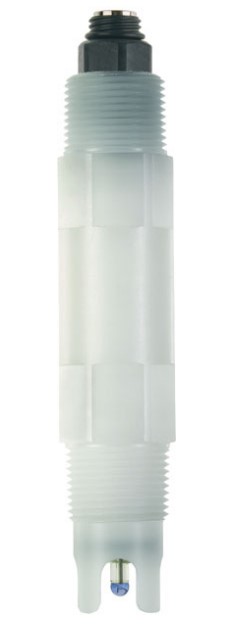
General descriptionThe electrodes are characterised by high mechanical and chemical resistance. Due to the stable PVDF body, there is practically no risk of the sensor breaking. The electrolyte of these combination electrodes guarantees a stable measured value, even in critical media containing sulphite.A Pt1000 temperature sensor is integrated. Depending on the application, the electrodes can be manufactured as pH or redox electrodes. An open annular gap diaphragm is used as the diaphragm.Areas of applicationChemical industryWaste water treatmentSewage treatmentPaper industry

Typical areas of applicationindustrial and municipal, general water and waste water engineeringProcess measurements, electroplating, final inspections, neutralisation plantsdrinking and well water, boiler feed waterlightly contaminated waste waterDouble-chamber design in the presence of electrode poisons (e.g. sulphides, cyanides)low-temperature applications (-30 ... +30 °C), e.g. measurement in cooling systemsFluoride-containing (hydrofluoric acid) media up to 1000 mg/l HFHigh-alkali applications (reduced alkali error at pH values > pH 12)Special featuresHigh-quality zirconium dioxide diaphragm (glass fibre diaphragm with plastic shaft)Cartridge discharge system with silver ion-free reference electrolytepressure-resistant versions up to 10 bar (50 °C)Temperature range: up to -5 ... +80 °C (90 °C for ORP) or -30 ... +30 °C (with TT version)Temperature sensors can be integrated as an optionoptional salt reserve to increase the service life in media with lower conductivity or in drinking waterJUMO HA glass for continuous measurements in the range up to pH 14ORP versions with platinum or gold tip up to ±2000 mV

Typical areas of applicationindustrial waste water technologyprocess measurements, electroplating, paper industry, beverage industryoily waste watersuspensions, lacquers, media with solid particlesDouble-chamber design in the presence of electrode poisonsFluoride-containing (hydrofluoric acid-containing) media up to 1000 mg/l HFSpecial featuresDirt-repellent PTFE ring diaphragm with highly viscous KCl solution (gel) or perforated or annular gap diaphragm with polymerised solid electrolyte - practically blockage-freeCartridge discharge system with silver ion-free reference electrolytePressure-resistant versions up to 10 bar (50 °C)Temperature range: see order detailsOptional temperature sensors can be integratedOptional salt reservoir to increase service life in media with low conductivity JUMO order code: A JUMO order code uniquely identifies a specific measuring instrument or component based on its configuration. You will find the exact JUMO order code for your instrument configuration in the relevant data sheet from page 5 onwards. This can be found under ‘Downloads’ for the product. JUMO order code for this product: 201025/51-22-04-22-120/837

This electrode is suitable for pool, groundwater and drinking water.Platinum - for standard applications in the pool and environmental sector as well as for normal or high temperature resistanceGold - used in connection with chlorine electrolysis and for normal or high temperature resistance

This electrode is suitable for pool, groundwater and drinking water.Platinum - for standard applications in the pool and environmental sector as well as for normal or high temperature resistanceGold - used in connection with chlorine electrolysis and for normal or high temperature resistance

This electrode is suitable for pool, groundwater and drinking water.Platinum - for standard applications in the pool and environmental sector as well as for normal or high temperature resistanceGold - used in connection with chlorine electrolysis and for normal or high temperature resistance

This electrode is suitable for pool, groundwater and drinking water.Platinum - for standard applications in the pool and environmental sector as well as for normal or high temperature resistanceGold - used in connection with chlorine electrolysis and for normal or high temperature resistance

This electrode is suitable for pool, groundwater and drinking water.Platinum - for standard applications in the pool and environmental sector as well as for normal or high temperature resistanceGold - used in connection with chlorine electrolysis and for normal or high temperature resistance

This electrode is suitable for pool, groundwater and drinking water.Platinum - for standard applications in the pool and environmental sector as well as for normal or high temperature resistanceGold - used in connection with chlorine electrolysis and for normal or high temperature resistance

This electrode is available as an inexpensive solution as well as with a double diaphragm for higher temperature resistance. It is suitable for general laboratory applications, pH & chlorine in swimming pools & whirlpools.

This electrode is available as an inexpensive solution as well as with a double diaphragm for higher temperature resistance. It is suitable for general laboratory applications, pH & chlorine in swimming pools & whirlpools.

This electrode is suitable for use in the environment, sewage and other sampling applications. It is a refillable laboratory electrode for standard applications and has a double diaphragm.