
Electrodes & Sensors for Redox Measurement – Reliable Monitoring of Oxidation-Reduction Potential
Redox measurements are essential for monitoring the oxidation and reduction state in various industrial and environmental applications. Our high-quality redox electrodes and sensors provide precise and stable results, indispensable for process control and quality assurance.
Typical applications:
- Monitoring water and wastewater quality
- Controlling chemical reactions in production processes
- Environmental analysis in water bodies and soils
- Use in the food and pharmaceutical industries

Connection cable for pH/redox Length: 3 metres Cable type: pH and redox connection cable Ø 5 mm, 75 °C Connection end 1 (sensor side): rotatable cable socket Connection end 2 (device side): without Electronic sensors for analysing liquids require special connection cables and plug connectors. The following applies in principle: The connection between an electrochemical sensor and the transmitter/indicator/controller should be as short as possible. Normally, the cable length is 5 to 10 metres to ensure a high level of functional reliability. If longer cable lengths are required in exceptional cases, the technical documentation for the sensors and measuring devices should be consulted. The cable between the sensor and the analyser must be laid directly, without interruptions such as terminal strips or cable extensions. pH and redox measurement Special coaxial cables with a special design are used for pH and redox measurement. During these measurements, the sensor generates low-intensity DC voltages which are transmitted to the analyser. Due to the sometimes very high internal resistance (potentiostatic measuring principle with internal resistances of up to several gigaohms), these measurements are extremely sensitive to electrical interference and the effects of radiation. Under unfavourable conditions, even minimal movements of the cable can lead to measurement value distortions. An additional insulation layer of the JUMO coaxial cable increases the insulation resistance, which enables a secure connection of the sensor to the transmitter. Conventional coaxial cables from the antenna and computer sector are not suitable for this application and can damage the sensors. This can lead to immediate failure of the sensor as well as a shortened service life. For multiple sensors, for example with integrated temperature sensors, coaxial cables with single wires are available, such as the Variopin (VP). Frequently Asked Questions Is this cable compatible with my pH or redox electrode? Yes, if your electrode has a rotatable cable connector (on the sensor side), you can use this connection cable without any issues. What is the unterminated cable end (without a plug) intended for? The open end is ideal if you wish to connect the cable directly to a measuring device or an existing terminal block. Why does the cable have a rotatable connector at the sensor end? The rotatable connector makes installation easier and prevents the cable from twisting during mounting. Can I extend or shorten the cable? The open end can be modified, shortened, or connected to a suitable plug as needed. Is the cable suitable for use in water or damp environments? Yes, it is designed for typical measurement environments associated with pH and redox monitoring. How do I correctly connect the cable to my electrode? Simply attach the rotatable connector to the electrode's connection point and tighten it securely. Is the cable suitable for continuous use? Yes, it is designed for the regular and continuous operation of pH or redox measurement systems. What should I do if I am unsure whether the cable fits? Simply send us the details of your electrode or measuring device—we will be happy to assist you.

Our flow cell kit is a simple and economical means of mounting pH and ORP electrodes for inline applications. Compatible with all 12 mm electrodes.

Our flow cell kit is a simple and economical means of mounting pH and ORP electrodes for inline applications. Compatible with all 12 mm electrodes.

Manufacturer number: 3014046710The flat platinum sensor at the tip allows measurement of samples with small volumeWaterproofCombined electrode

Manufacturer number: 3200922105The flat platinum sensor at the tip allows measurement of samples with small volumeWaterproofNot refillableCombined electrode

The Horiba LAQUA 300 BNC adapter is designed to act as an adapter for connecting an ion-selective electrode to the corresponding Smart Sensor module, which is fitted with a cable for connection to a HORIBA Laqua 300 series analyser. HORIBA BNC Adapter 300-BNC – Maximum flexibility for your HORIBA Laqua WQ300 analysers The HORIBA BNC Adapter 300-BNC is the ideal solution if you wish to flexibly expand your HORIBA Laqua WQ300 analysers and easily connect a wide variety of electrodes for immediate use. Whether in the laboratory, in water analysis or in industrial quality control – with this adapter, you can create a universal connection between the measuring instrument and the electrode, significantly expanding the range of applications for your measurement technology. Universal compatibility – Greater freedom in electrode selection With the HORIBA 300-BNC Adapter, you are no longer restricted to manufacturer-specific sensors. The adapter stands out because it can connect not only HORIBA-specific electrodes but also electrodes from other manufacturers, provided they have a BNC connector. The inclusion of a second input in the form of a RCA connector also enables the transmission of temperature data, supporting temperature-compensated measurement and display. Compatibility includes: 3-in-1 / combination pH electrodes and the pH sensor heads 300PH-2 / 300PH-5 3-in-1 / combination ORP electrodes and the ORP sensor head 300-O-2 Combination ion-selective electrodes (ISEs) and the ion sensor head 300-I-2 Thanks to an additional phono/RCA connector, temperature data can also be transmitted – for precise, temperature-compensated measurements. Which Horiba ion-selective electrodes is the adapter compatible with? 895882 Horiba 6560S-10C, chloride ion (Cl-) electrode 895883 Horiba 6561S-10C, fluoride ion (F-) electrode 895880 Horiba 5002S-10C, Ammonia (NH3) ion electrode with 3x membrane cap Your benefits at a glance Extended measurement capabilities: Use a wide variety of electrodes and measure a multitude of parameters – from pH and redox to specific ions. Manufacturer-independent flexibility: Choose the best electrode for your application – regardless of the manufacturer. Precise measurement results: Thanks to temperature compensation, you obtain reliable and reproducible results, even under changing conditions. Easy to use: The adapter allows electrodes to be connected quickly and easily to the WQ300 series measuring instruments. This saves time and optimises use in the laboratory and in the field. Quick connection, secure fit and ready for immediate use – ideal for laboratory and field use. Typical applications The HORIBA BNC Adapter 300-BNC is perfect for: Water analysis & environmental monitoring Research & development laboratories Food and beverage industry Chemical and pharmaceutical industry Quality assurance & production control Whether you are measuring pH values, determining redox potentials or analysing ion concentrations – this adapter turns your measuring instrument into a universal analysis platform. It is particularly useful for users who need a flexible solution to carry out a wide range of measurements with their existing HORIBA WQ300 measuring instruments. The 300-BNC adapter significantly expands the range of applications for the WQ300 series and enables cross-manufacturer compatibility in the field of electrochemical measurements. Why buy the HORIBA 300-BNC adapter? If you already own a HORIBA Laqua WQ300 meter, this adapter is an essential accessory for: continuing to use your existing electrodes saving on the cost of new sensor systems significantly expanding your measurement capabilities The HORIBA 300-BNC adapter transforms your HORIBA Laqua WQ300 series analysers into an open and flexible measurement system for a wide range of applications. Benefit from maximum compatibility, precise measurement results and easy integration into existing measurement processes.

ORP cable with digital sensor head to mount the "300-O-C ORP electrode". Manufacturer Part Nr. : 3200812204 (2 metres 300-O-2) 3200923561 (5 metres 300-O-5)

300-O-C ORP sensor cartridge Manufacturer article number: 3200922104
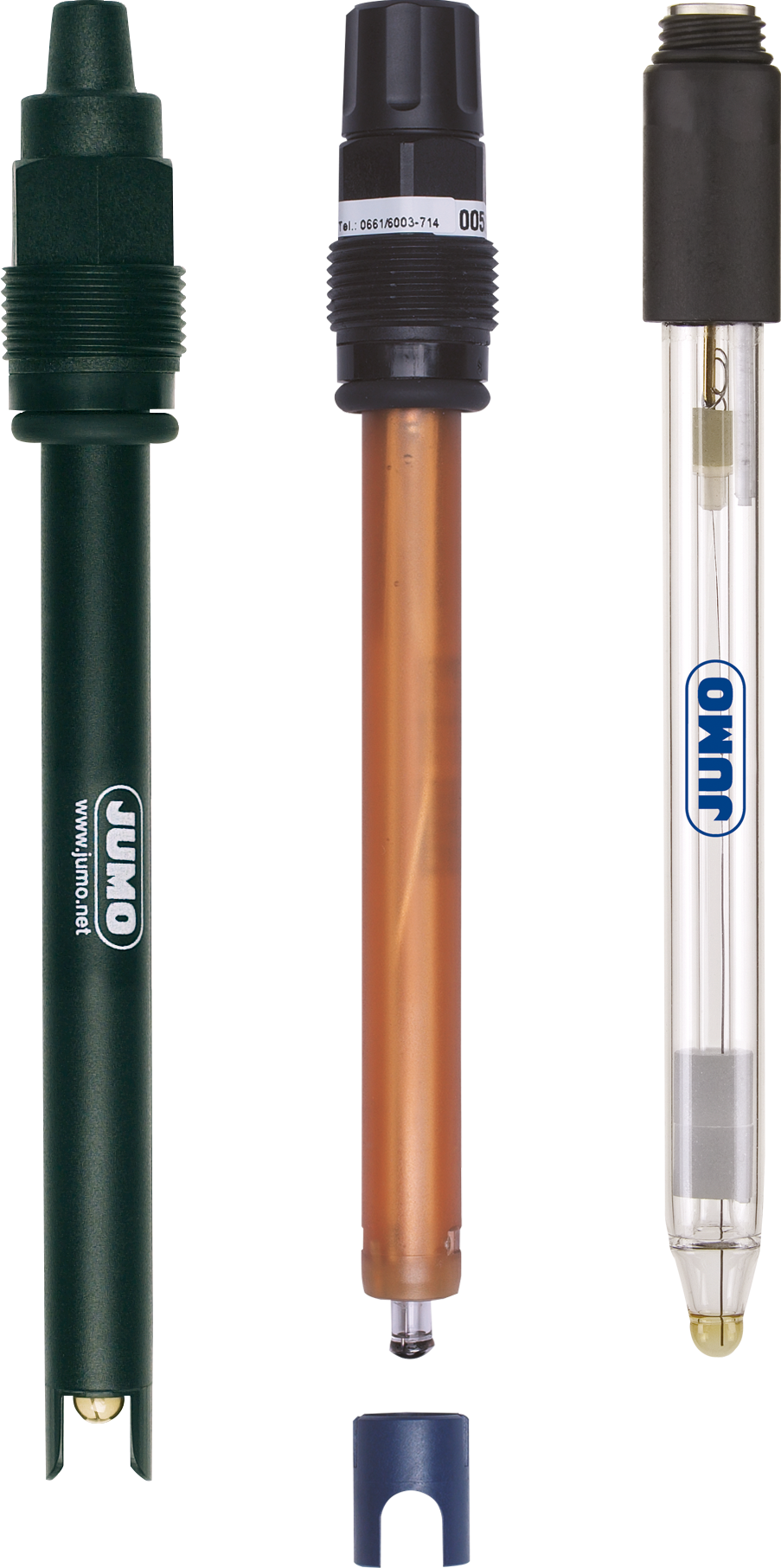
BlackLine pH/ORP electrodes with plastic shaft and fixed protection basket.Selected version: Without temperature sensor (not available for this series, only for Jumo tecLine and tecLine HD series)Screw head S8 Pg13.5 Glass fibre diaphragm Plastic shaft PEI Fitting length 120mm (standard) Type code (can also be found on your electrode): Type 201005/65-18-22-0000-00-120/837 ; part-no. 00419812 Type 201005/65-18-45-2000-76-120/837 ; part-no. 00417300 Type 201005/65-18-65-2000-76-120/837 ; part-no. 00424828 Type 201010/65-22-45-2000-76-120/837 ; part-no. 00417301 Type 201010/65-22-65-2000-76-120/837 ; part-no. 00424950 The electrodes of the JUMO BlackLine series are high-quality measuring sensors with a favorable price/performance ratio.Active part pH The JUMO BlackLine plastic electrodes with fixed protection basket are equipped with the low-resistance JUMO UW glass. This guarantees fast and reliable measurement results. Active part redox The robust platinum tip ensures reliable measurements and is also easy to clean. Reference system The Black Line plastic shaft version PEI uses a polymerised KCl solid electrolyte. This is ideally suited for measurements in aqueous media. For measurements in media with fewer ions or at high flow rates, the electrolyte can be equipped with an optional "salt reservoir" to increase the service life. A polymerized KCl solid electrolyte is also used with this electrode, and the JUMO cartridge discharge system, which has been tried and tested for years, is used as the reference system. Here, the electrolyte remains free of silver ions over the lifetime of the sensor and is therefore less susceptible to electrode poisons. The JUMO BlackLine has a high-quality ceramic diaphragm. The shaft is made of black PPO and has a permanently integrated protective basket. Optionally, the electrodes can be supplied in a storage container (quiver). This is recommended if the sensor is only used sporadically, for refreshing the sensor after longer, intensive use or for longer storage periods. All sensors can be supplied as OEM versions on request. Special versions on request. Areas of applicationDrinking water monitoring and treatmentSwimming poolAquaristics (also seawater aquaristics)Greenhouse technology Lightly polluted industrial, process and waste water Rainwater, pond water and surface water hand-held meters Not recommended forgalvanic water treatmentindustrial process and waste waterultrapure watertherapeutic bathsbiotechnologysterilisation processes

This electrode is particularly suitable for applications where a good price-performance ratio, easy handling, and stable measurement values are required. JUMO ecoLine glass shaft ORP electrode, platinum tip and S8 Pg13.5 screw head (201010/51-22-22-0000-00-120/000; Part No. 00413906) The JUMO ecoLine glass shaft ORP electrode with platinum tip and S8 Pg13.5 screw head is a cost-effective solution for reliable redox (ORP) measurements in general aqueous media. Design of the ORP electrode The robust platinum tip ensures reliable redox measurement and is also easy to clean. In combination with the ceramic diaphragm and the polymerized KCl gel electrolyte, the electrode is well suited for many typical water applications. The proven JUMO cartridge reference system keeps the electrolyte free of silver ions throughout its service life, making it less susceptible to certain electrode poisons. Typical applications With a measuring range of ±2000 mV, the S8 Pg13.5 screw head, and a standard insertion length of 120 mm, this version is suitable for many common installation situations. A temperature sensor is not available in the ecoLine series, making this electrode ideal for applications where integrated temperature measurement is not required. Drinking water monitoring and water treatment Swimming pools Aquatics Greenhouse technology as well as lightly contaminated utility, process, and wastewater Also suitable for rainwater, pond, and surface water Suitable for use in portable measuring devices Not recommended for: Electroplating water treatment Industrial process and wastewater Ultrapure water Therapeutic baths as well as biotech and sterilization processes Frequently Asked Questions What can I use this redox electrode for? It is suitable for redox measurements in water, such as in pools, aquariums, or water treatment systems. Is the electrode suitable for daily use? Yes. It is designed for simple, stable measurements in everyday use. Can I use the electrode in swimming pools? Yes. It is well-suited for swimming pools and similar water applications. What is the benefit of the platinum tip? It ensures reliable readings and is easy to clean. Which types of water is the electrode suitable for? It is suitable for drinking water, pond water, rainwater, and slightly contaminated water. For which applications is it not suitable? It is not recommended for ultrapure water, industrial wastewater, or electroplating applications. Is the electrode easy to install? Yes. The S8 Pg13.5 screw head allows for easy installation.

With an S8 Pg13.5 screw head and a 120 mm insertion length, the electrode can be integrated into many common measurement tasks. It is used in a wide range of applications such as drinking water monitoring or swimming pools. JUMO ecoLine Redox plastic shaft electrode with S8 Pg13.5 screw head and attachable protective cage (201010/53-22-22-0000-00-120/000; Part No. 00357020) The JUMO ecoLine Redox plastic shaft electrode is designed for reliable redox measurements in general aqueous media and offers a cost-effective solution for many standard applications. Thanks to its PEI plastic shaft and attachable protective cage, this version is particularly suitable for practical use with portable measuring devices or wherever additional sensor protection is required in everyday operation. For redox measurement, a robust platinum tip is used, which ensures stable measurement values and is easy to clean. The electrode is complemented by a proven reference system with a polymerized KCl gel electrolyte, which is well suited for general water applications. The JUMO cartridge reference system helps keep the electrolyte free of silver ions throughout its service life, making it less susceptible to certain electrode poisons. Typical applications Drinking water monitoring and water treatment Swimming pools, aquatics, greenhouse technology Lightly contaminated utility, process, and wastewater Also suitable for rainwater, pond, and surface water Environmental applications Beverage and food industry Not recommended for: Electroplating water treatment Industrial process and wastewater Ultrapure water Therapeutic baths Biotech and sterilization processes Frequently Asked Questions What can I use this redox electrode for? It is suitable for redox measurements in water, such as in swimming pools or drinking water systems. Is the electrode suitable for daily use? Yes. It is designed for simple, reliable measurements in everyday use. What is the purpose of the attachable protective cage? It protects the sensor from damage during daily use. Can I use the electrode in swimming pools? Yes. It is well-suited for swimming pools and similar water applications. What types of water is it suitable for? It is suitable for drinking water, pond water, rainwater, and slightly contaminated water. For which applications is it not suitable? It is not recommended for ultrapure water, industrial wastewater, or electroplating applications. Is the electrode easy to clean? Yes. The platinum tip is easy to clean and maintain.

Brief description The high-quality materials and components of the JUMO tecLine HD electrodes make them particularly suitable for the most demanding applications in process and industrial measurement technology. They are combined combination electrodes (with a reference electrode and a glass or metal electrode in a shaft).Depending on the design, it is possible to integrate an additional Pt1000 temperature sensor.Insensitive to large amounts of dirt as well as processes and waste water rich in oil and grease. For processes with a high solids content (e.g. waste water with sand particles or media that are subject to precipitation or crystallisation reactions), a perforated diaphragm variant is available as the optimum solution. JUMO tecLine HD electrodes represent the latest technology for pH and redox electrodes. Each electrode is a high-quality product that is individually unit-tested and comes with a calibration certificate. Modern production facilities guarantee constant values.All conventional electrodes are made from physiologically safe and FDA-listed materials.Their shaft glass is lead-free and therefore RoHS 2 compliant. Translated with DeepL.com (free version)

Typical areas of applicationindustrial and municipal, general water and waste water engineeringProcess measurements, electroplating, final inspections, neutralisation plantsdrinking and well water, boiler feed waterlightly contaminated waste waterDouble-chamber design in the presence of electrode poisons (e.g. sulphides, cyanides)low-temperature applications (-30 ... +30 °C), e.g. measurement in cooling systemsFluoride-containing (hydrofluoric acid) media up to 1000 mg/l HFHigh-alkali applications (reduced alkali error at pH values > pH 12)Special featuresHigh-quality zirconium dioxide diaphragm (glass fibre diaphragm with plastic shaft)Cartridge discharge system with silver ion-free reference electrolytepressure-resistant versions up to 10 bar (50 °C)Temperature range: up to -5 ... +80 °C (90 °C for ORP) or -30 ... +30 °C (with TT version)Temperature sensors can be integrated as an optionoptional salt reserve to increase the service life in media with lower conductivity or in drinking waterJUMO HA glass for continuous measurements in the range up to pH 14ORP versions with platinum or gold tip up to ±2000 mV

Typical areas of applicationindustrial waste water technologyprocess measurements, electroplating, paper industry, beverage industryoily waste watersuspensions, lacquers, media with solid particlesDouble-chamber design in the presence of electrode poisonsFluoride-containing (hydrofluoric acid-containing) media up to 1000 mg/l HFSpecial featuresDirt-repellent PTFE ring diaphragm with highly viscous KCl solution (gel) or perforated or annular gap diaphragm with polymerised solid electrolyte - practically blockage-freeCartridge discharge system with silver ion-free reference electrolytePressure-resistant versions up to 10 bar (50 °C)Temperature range: see order detailsOptional temperature sensors can be integratedOptional salt reservoir to increase service life in media with low conductivity

This electrode is suitable for pool, groundwater and drinking water.Platinum - for standard applications in the pool and environmental sector as well as for normal or high temperature resistanceGold - used in connection with chlorine electrolysis and for normal or high temperature resistance

This electrode is suitable for pool, groundwater and drinking water.Platinum - for standard applications in the pool and environmental sector as well as for normal or high temperature resistanceGold - used in connection with chlorine electrolysis and for normal or high temperature resistance

This electrode is suitable for pool, groundwater and drinking water.Platinum - for standard applications in the pool and environmental sector as well as for normal or high temperature resistanceGold - used in connection with chlorine electrolysis and for normal or high temperature resistance

This electrode is suitable for pool, groundwater and drinking water.Platinum - for standard applications in the pool and environmental sector as well as for normal or high temperature resistanceGold - used in connection with chlorine electrolysis and for normal or high temperature resistance

This electrode is suitable for pool, groundwater and drinking water.Platinum - for standard applications in the pool and environmental sector as well as for normal or high temperature resistanceGold - used in connection with chlorine electrolysis and for normal or high temperature resistance

This electrode is suitable for pool, groundwater and drinking water.Platinum - for standard applications in the pool and environmental sector as well as for normal or high temperature resistanceGold - used in connection with chlorine electrolysis and for normal or high temperature resistance

The modular ORP measuring package consists of a 3 m connection cable, a Modbus head transmitter, the sensor holder and the ORP flat-head electrode. Due to the construction of the sensor only the ORP electrode has to be replaced. All other components of this system can be used continuously. For an optimal process integration the NeoTec Sensor is delivered with a fitting T-piece. Advantages:preconfigured for NeoTecMaster® modular design industry standard resource friendly

Module for manufacturer-independent integration of pH, ORP and conductivity standard sensors (PT1000 based), which do not have an integrated signal converter on site. Integration of existing/existing sensors into the NeoTecMaster® concept via 4-20 mA signal.Advantages:accommodates all pH, ORP and conductivity standard electrodes industry standard allows the use of existing sensors

Module for manufacturer-independent integration of pH, ORP and conductivity standard sensors (PT1000 based), which do not have an integrated signal converter on site. Integration of existing/existing sensors into the NeoTecMaster® concept via 4-20 mA signal.Advantages:accommodates all pH, ORP and conductivity standard electrodes easy wall installationindustry standard allows the use of existing sensors

Module for manufacturer-independent integration of pH, ORP and conductivity standard sensors (PT1000 based), which do not have an integrated signal converter on site. Integration of existing/existing sensors into the NeoTecMaster® concept via Modbus signal.Advantages: accommodates all pH, ORP and conductivity standard electrodes industry standard allows the use of existing sensors