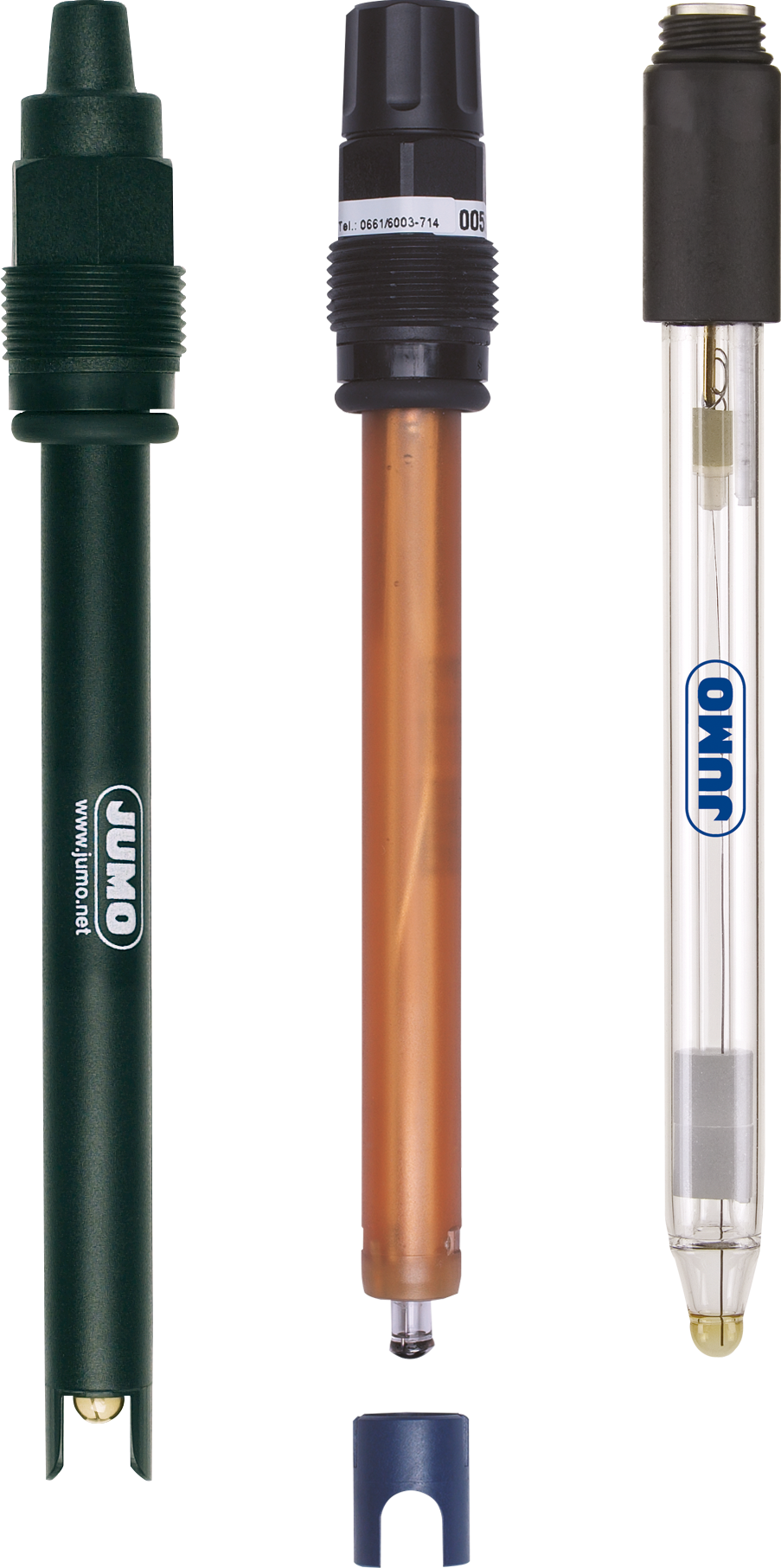
Electrodes and sensors are used in industry for a variety of applications to measure and monitor physical, chemical and biological processes.
The electrodes and sensors are generally used to measure and control certain parameters. They are used to increase efficiency and improve the quality of production processes and to ensure safety in the workplace.
Overall, electrodes and sensors help to make industrial processes more efficient, safer and of higher quality. They enable the measurement and control of important parameters in order to increase the effectiveness and profitability of production processes.
Some examples of applications are
- pH sensors and electrodes
- Oxygen sensors and electrodes
- Conductivity sensors and electrodes
- Temperature sensors and electrodes
- Biological sensors and electrodes
- Water Analyzers
- Liquid chemistry
- Controls
- Electrodes and sensors
- Hand-held measuring instruments and analysis cases
- Laboratory Benchtop Meters
- NeoTec World
- Permeate
- Clinical Solutions
- Seminars & Webinars
- Ozone and UV technology
- Dosing pumps
- Gas Measuring Instruments
- Hygiene and Disinfection
- Water Meters
- Accessories
- Blog
Filter products
BlackLine pH/ORP electrodes with plastic shaft and fixed protection basket.Selected version: Without temperature sensor (not available for this series, only for Jumo tecLine and tecLine HD series)Screw head S8 Pg13.5 Glass fibre diaphragm Plastic shaft PEI Fitting length 120mm (standard) Type code (can also be found on your electrode): Type 201005/65-18-22-0000-00-120/837 ; part-no. 00419812 The electrodes of the JUMO BlackLine series are high-quality measuring sensors with a favorable price/performance ratio.Active part pH The JUMO BlackLine plastic electrodes with fixed protection basket are equipped with the low-resistance JUMO UW glass. This guarantees fast and reliable measurement results. Active part redox The robust platinum tip ensures reliable measurements and is also easy to clean. Reference system The Black Line plastic shaft version PEI uses a polymerised KCl solid electrolyte. This is ideally suited for measurements in aqueous media. For measurements in media with fewer ions or at high flow rates, the electrolyte can be equipped with an optional "salt reservoir" to increase the service life. A polymerized KCl solid electrolyte is also used with this electrode, and the JUMO cartridge discharge system, which has been tried and tested for years, is used as the reference system. Here, the electrolyte remains free of silver ions over the lifetime of the sensor and is therefore less susceptible to electrode poisons. The JUMO BlackLine has a high-quality ceramic diaphragm. The shaft is made of black PPO and has a permanently integrated protective basket. Optionally, the electrodes can be supplied in a storage container (quiver). This is recommended if the sensor is only used sporadically, for refreshing the sensor after longer, intensive use or for longer storage periods. All sensors can be supplied as OEM versions on request. Special versions on request. Areas of applicationDrinking water monitoring and treatmentSwimming poolAquaristics (also seawater aquaristics)Greenhouse technology Lightly polluted industrial, process and waste water Rainwater, pond water and surface water hand-held meters Not recommended forgalvanic water treatmentindustrial process and waste waterultrapure watertherapeutic bathsbiotechnologysterilisation processes
Contact resistance thermometer with mounting hole Protective fitting aluminium Typ: 902550/10-386-1003-1-11-2500/000 Temperature range from -50 to +260°C (PTFE) 1× Pt100 in two-wire circuit Tolerance class according to DIN EN 60751: Class B (standard) Connection cable end: Wire end ferrules to DIN 46228 Part 4 (standard) Connection length in mm: 2500 mm Extra code: without Suitable for round and flat surfaces Quick and uncomplicated installation with protective fittings made of various materials Low thermal mass Optimum heat transfer from the measuring point to the sensor Contact resistance thermometers are ideal for precise temperature measurements on closed pipe systems and other round or flat surfaces. The uncomplicated mounting with tensioning straps or hose clamps eliminates the need for mechanical processing of the measuring point. Indirect temperature measurement guarantees interference-free temperature measurement, unaffected by flow, pressure or chemical influences. Due to the low thermal mass of the measurement object, the influence is kept to a minimum. Heat-conducting paste is available as an option to optimise heat transfer. Large temperature differences between the measured medium and the environment are directly reflected in the measurement; additional insulation is recommended here. A Pt100 temperature sensor in accordance with DIN EN 60751 Class B is installed as standard in a two-wire circuit, but variants with Pt500, Pt1000 are also possible.
Contact resistance thermometer with mounting hole Stainless steel protective fitting Typ: 902550/11-386-1003-1-11-2500/000 Temperature range from -50 to +260°C (PTFE) 1× Pt100 in two-wire circuit Tolerance class according to DIN EN 60751: Class B (standard) Connection cable end: Wire end ferrules to DIN 46228 Part 4 (standard) Connection length in mm: 2500 mm Extra code: without Suitable for round and flat surfaces Quick and uncomplicated installation with protective fittings made of various materials Low thermal mass Optimum heat transfer from the measuring point to the sensor Contact resistance thermometers are ideal for precise temperature measurements on closed pipe systems and other round or flat surfaces. The uncomplicated mounting with tensioning straps or hose clamps eliminates the need for mechanical processing of the measuring point. Indirect temperature measurement guarantees interference-free temperature measurement, unaffected by flow, pressure or chemical influences. Due to the low thermal mass of the measurement object, the influence is kept to a minimum. Heat-conducting paste is available as an option to optimise heat transfer. Large temperature differences between the measured medium and the environment are directly reflected in the measurement; additional insulation is recommended here. A Pt100 temperature sensor in accordance with DIN EN 60751 Class B is installed as standard in a two-wire circuit, but variants with Pt500, Pt1000 are also possible.
Contact resistance thermometer with mounting hole Stainless steel protective fitting Typ: 902550/30-378-1003-1-11-2500/315, Temperature range from -50 to +260°C (PTFE) 1× Pt100 in two-wire circuit Tolerance class according to DIN EN 60751: Class B (standard) Connection cable end: Wire end ferrules to DIN 46228 Part 4 (standard) Connection length in mm: 2500 mm Extra code: Spring bend protection Suitable for round and flat surfaces Quick and uncomplicated installation with protective fittings made of various materials Low thermal mass Optimum heat transfer from the measuring point to the sensor Contact resistance thermometers are ideal for precise temperature measurements on closed pipe systems and other round or flat surfaces. The uncomplicated mounting with clamping straps or hose clamps eliminates the need for mechanical processing of the measuring point.Indirect temperature measurement guarantees interference-free temperature measurement, unaffected by flow, pressure or chemical influences. Due to the low thermal mass of the measurement object, the influence is kept to a minimum. Heat-conducting paste is optionally available to optimise heat transfer.Large temperature differences between the measured medium and the environment are directly reflected in the measurement; additional insulation is recommended here.A Pt100 temperature sensor in accordance with DIN EN 6
Contact resistance thermometer with mounting hole Protective fitting aluminium Typ: 902550/31-730-1003-1-11-2500/000 Temperature range from -5 to +105°C (PVC) 1× Pt100 in two-wire circuit Tolerance class according to DIN EN 60751: Class B (standard) Connection cable end: Wire end ferrules to DIN 46228 Part 4 (standard) Connection length in mm: 2500 mm Extra code: without Suitable for round and flat surfaces Quick and uncomplicated installation with protective fittings made of various materials Low thermal mass Optimum heat transfer from the measuring point to the sensor Contact resistance thermometers are ideal for precise temperature measurements on closed pipe systems and other round or flat surfaces. The uncomplicated mounting with clamping straps or hose clamps eliminates the need for mechanical processing of the measuring point.Indirect temperature measurement guarantees interference-free temperature measurement, unaffected by flow, pressure or chemical influences. Due to the low thermal mass of the measurement object, the influence is kept to a minimum. Heat-conducting paste is optionally available to optimise heat transfer.Large temperature differences between the measured medium and the environment are directly reflected in the measurement; additional insulation is recommended here.A Pt100 temperature sensor in accordance with DIN EN 60751 Class B in a two-wire circuit is fitted as standard, but variants with Pt500, Pt1000 are also possible.
Contact resistance thermometer with mounting hole Protective fitting aluminium (D 10x26 mm) Typ: 902550/31-378-1003-1-11-2500/000 Temperature range from -50 to +180°C (Silicon) 1× Pt100 in two-wire circuit Tolerance class according to DIN EN 60751: Class B (standard) Connection cable end: Wire end ferrules to DIN 46228 Part 4 (standard) Connection length in mm: 2500 mm Extra code: without Suitable for round and flat surfaces Quick and uncomplicated installation with protective fittings made of various materials Low thermal mass Optimum heat transfer from the measuring point to the sensor Contact resistance thermometers are ideal for precise temperature measurements on closed pipe systems and other round or flat surfaces. The uncomplicated mounting with clamping straps or hose clamps eliminates the need for mechanical processing of the measuring point.Indirect temperature measurement guarantees interference-free temperature measurement, unaffected by flow, pressure or chemical influences. Due to the low thermal mass of the measurement object, the influence is kept to a minimum. Heat-conducting paste is optionally available to optimise heat transfer.Large temperature differences between the measured medium and the environment are directly reflected in the measurement; additional insulation is recommended here.A Pt100 temperature sensor in accordance with DIN EN 60751 Class B in a two-wire circuit is fitted as standard, but variants with Pt500, Pt1000 are also possible.
Contact resistance thermometer with mounting hole Protective fitting aluminium Typ: 902550/31-378-1005-1-11-2500/000 Temperature range from -50 to +180°C (PVC) 1× Pt1000 in two-wire circuit Tolerance class according to DIN EN 60751: Class B (standard) Connection cable end: Wire end ferrules to DIN 46228 Part 4 (standard) Connection length in mm: 2500 mm Extra code: without Suitable for round and flat surfaces Quick and uncomplicated installation with protective fittings made of various materials Low thermal mass Optimum heat transfer from the measuring point to the sensor Contact resistance thermometers are ideal for precise temperature measurements on closed pipe systems and other round or flat surfaces. The uncomplicated mounting with clamping straps or hose clamps eliminates the need for mechanical processing of the measuring point.Indirect temperature measurement guarantees interference-free temperature measurement, unaffected by flow, pressure or chemical influences. Due to the low thermal mass of the measurement object, the influence is kept to a minimum. Heat-conducting paste is optionally available to optimise heat transfer.Large temperature differences between the measured medium and the environment are directly reflected in the measurement; additional insulation is recommended here.A Pt100 temperature sensor in accordance with DIN EN 60751 Class B in a two-wire circuit is fitted as standard, but variants with Pt500, Pt1000 are also possible.
Contact resistance thermometer with mounting hole Protective fitting stainless stell Typ: 902550/20-386-1003-1-11-2500/000 Temperature range from -50 to +260°C (PTFE) 1× Pt100 in two-wire circuit Tolerance class according to DIN EN 60751: Class B (standard) Connection cable end: Wire end ferrules to DIN 46228 Part 4 (standard) Connection length in mm: 2500 mm Extra code: without Suitable for round and flat surfaces Quick and uncomplicated installation with protective fittings made of various materials Low thermal mass Optimum heat transfer from the measuring point to the sensor Contact resistance thermometers are ideal for precise temperature measurements on closed pipe systems and other round or flat surfaces. The uncomplicated installation with tensioning straps or hose clamps eliminates the need for mechanical processing of the measuring point.Indirect temperature measurement guarantees interference-free temperature measurement, unaffected by flow, pressure or chemical influences. Due to the low thermal mass of the measurement object, the influence is kept to a minimum. Heat-conducting paste is optionally available to optimise heat transfer.Large temperature differences between the measured medium and the environment are directly reflected in the measurement; additional insulation is recommended here.A Pt100 temperature sensor in accordance with DIN EN 60751 Class B in a two-wire circuit is fitted as standard, but variants with Pt500, Pt1000 are also possible.
The JUMO digiLine O-DO S10 is a modern, intelligent sensor for measuring dissolved oxygen. The measurement is based on the optical principle of luminescence quenching according to ASTM D888-05. This offers users numerous advantages: No electrolyte replacement required No polarization voltage necessary No minimum flow required Longer calibration intervals thanks to low drift behavior Long-term stable and reliable measurement results Temperature compensation is performed automatically, so that the measured value is always output temperature-compensated. In addition, the sensor can also correct the measured value with regard to air pressure and salinity (using external sensors). The JUMO digiLine O-DO S10 has two interfaces for transferring the measured values to higher-level systems or automation solutions: digitally via an RS485 interface with Modbus RTU protocol or analogically via a 4...20 mA two-wire signal. Configuration, parameterization, and calibration data are stored in the sensor's electronics. Sensor-specific information and measuring point identifiers can also be stored there and read out as needed. In addition, the sensor offers a logbook that documents the last ten successful calibrations, providing an overview of the calibration history. To support operational safety, the sensor is equipped with a self-diagnostic function that issues warnings or error messages in the event of malfunctions. The sensor features a slim, robust design. The sensor cap can be easily replaced when worn. The sensor body is made of durable PVC and is therefore suitable for applications in fresh and salt water. A permanently attached cable with a 5-pin M12 connector ensures quick and easy connection to measuring or automation devices. The sensor offers two connection options for installation: an Rp 1 thread directly on the sensor shaft or, alternatively, an optionally available mounting kit with a G 1 thread.
JUMO diraVIEW 108 - Digital indicator Typ: 701514/8-0000-23/000 Version: Standard with factory settings Power supply: AC 110-240 V +10/-15%, 48 to 63 Hz Option 1-4: not assigned Extra code: without 1 analogue input 2 digital inputs (digital input 1 as an alternative to logic output) 1 relay (normally open contact) 1 logic output 0/14 V (alternative to digital input 1) Display and storage of min/max values Tare function Hold function Tare function for weighing applications Customised linearisation with the option of defining up to 40 value pairs or a polynomial Timer function Monitoring of 4 limit values Customised user levels Optional customised application using structured text (ST code) Optional maths and logic function Simple installation thanks to push-in technology Optional analogue output Optional RS485 or Ethernet interface Additional analogue and digital inputs via the interface This digital indicator consists of five freely configurable and universally applicable devices in different DIN formats for displaying temperature, pressure and other process variables. The process variables and parameters are displayed on two 18-segment LCD displays. Types 701512, 701513 and 701514 are also equipped with a pixel matrix LCD display for displaying text. In addition, all devices have separate display elements for the switching positions of the outputs and the timer. They are operated via a membrane keypad with four buttons and are suitable for use in harsh environmental conditions thanks to their high IP65 protection rating. Inputs and outputs Each device type is equipped with a universal analogue input that is suitable for resistance thermometers, thermocouples, current, voltage, resistance transmitters and resistance/potentiometers. In addition, each device has a digital input, a switchable digital input/output. With the exception of type 701510, which has one relay output (normally open contact) as standard, all other types have two relay outputs (normally open contact). The digital inputs are designed for connection with a potential-free contact. The digital output provides a logic signal from 0 to 14 V. Furthermore, additional optional Relay outputs (normally open contact) Logic outputs (0 to 14 V) PhotoMOS® relay outputs Analogue output (0 to 10V / 0 to 20 mA) are available. Certain inputs and outputs cannot be used simultaneously (see notes in the connection diagram) Signal assignment via selectors The input signals and all internal signals are available in so-called selectors (analogue selector, digital selector) for further use in the device. The control signals for the outputs are also assigned via selectors, which enables flexible assignment of signals and functions. Interfaces The device has a USB device interface (Micro-B socket on the rear), which is specially designed for connection to a PC for the setup programme. During configuration, the device is supplied with power via this USB interface so that no mains supply is required. An optional RS485 interface is available, which is intended for communication with a Modbus master (Modbus RTU operating mode). The master can transmit up to two analogue values and two binary values to the device, which are used there as external input signals. In addition, two analogue flags and two digital flags (binary) are available. An Ethernet interface is also available as an option, which supports the Modbus TCP and Modbus RTU/ASCII operating modes via TCP. The same parameters and process values can be transmitted via this interface as via the RS485 interface. Power supply Two power supply variants are available: AC110 to 240 V AC/DC 20 to 30 V 48 to 63 Hz in each case Electrical connection Simple and time-saving connection using practical spring-loaded terminals (push-in technology) Min-max function Using the min-max function, the lowest and highest measured values are saved and continuously updated. It is possible to display these values separately or alternately with the current measured value. A binary signal makes it possible to reset the stored values and return them to the current measured value. Hold function The hold function "freezes" the value of the indicator, which means that this value is displayed for as long as the controlling binary signal is active. Tare function The tare function makes it possible to set the value of the indicator to zero, controlled by a binary signal (for weighing applications). The currently displayed value is added to the tare value each time. Another binary signal can be used to reset the tare value to zero so that the current value appears on the display again. Limit value monitoring The device has four limit value monitors, each with eight configurable alarm functions. Any analogue signal can be selected from a selector for monitoring. The limit values can either be absolute values or depend on another analogue signal. Various special functions are available, such as On/off delay Wiper function Alarm suppression during the switch-on phase or in the event of parameter changes Alarm latching Latching with acknowledgement available. These extensive functions enable flexible and precise realisation of alarm and limit value functions. Digital control signals This function enables the configuration of up to 4 digital control signals. The control signal is either formed by an AND/OR/XOR combination of up to three selectable binary signals or a single binary signal is used as an input signal and can be output as a pulsed signal, delayed signal, wiper signal or edge-triggered signal. In the latter case, the rising or falling edge of the binary signal is determined and the output signal is activated for the duration of a sampling interval. The output signal can be inverted in all these cases. Timer Once the timer is activated, an invertible signal is generated for the specified timer runtime. The timer can also be started after a lead time has elapsed or a tolerance limit has been reached. After the timer has elapsed, a timer end signal can be generated that is either time-limited or requires acknowledgement. These timer functions enable a wide range of time-dependent processes. Service counter The service counter can either count the number of switching operations of a binary signal or measure its switch-on duration. As soon as the adjustable limit value is reached, a binary signal is activated that must be acknowledged. An operating hours counter is also available, which records the operating time of the device. Maths and logic function The optional maths and logic function (extra code) can be used to link analogue or binary values. Up to four freely configurable maths or logic formulas can be created using the setup program. The results are then available for further use in the analogue or digital selector. Individual user level The individual user level offers space for up to 16 editable configuration parameters. These parameters can be selected individually in the setup programme. Setup programme With the setup programme, data records can be created, edited, transferred to the device and read out from there. The data can be saved and printed out. The programme also allows the user to easily create and print out a connection diagram showing the current terminal assignment of the device. Startup: The startup function enables the recording of process variables during commissioning for a maximum of 24 hours. The recorded diagrams are available on the PC and can be used for system documentation, for example. Online data: The current process variables of the device are displayed in a separate window. Customer-specific linearisation Individual linearisation according to customer requirements also makes it possible to use sensor signals with special characteristics. Programming is carried out in the setup program either using your value table with up to 40 value pairs or using a formula (4th order polynomial). The device supports 2 customer-specific linearisations. Structured text The "Structured text" option (extra code) allows the user to develop a customised application. This application is created using the ST editor, which is part of the setup programme, and uses the "Structured text" PLC programming language. Once completed, the application is transferred to the device and executed continuously. Online debugger functions are available in the ST editor for troubleshooting and testing. With the help of the ST code, it is possible to display up to 10 stored text messages depending on the application.
JUMO diraVIEW 108 - Digital indicator Typ: 701513/8-0000-23/000 Version: Standard with factory settings Power supply: AC 110-240 V +10/-15%, 48 to 63 Hz Option 1-4: not assigned Extra code: without 1 analogue input 2 digital inputs (digital input 1 as an alternative to logic output) 2 relay (normally open contact) 1 logic output 0/14 V (alternative to digital input 1) Display and storage of min/max values Tare function Hold function Tare function for weighing applications Customised linearisation with the option of defining up to 40 value pairs or a polynomial Timer function Monitoring of 4 limit values Customised user levels Optional customised application using structured text (ST code) Optional maths and logic function Simple installation thanks to push-in technology Optional analogue output Optional RS485 or Ethernet interface Additional analogue and digital inputs via the interface This digital indicator consists of five freely configurable and universally applicable devices in different DIN formats for displaying temperature, pressure and other process variables. The process variables and parameters are displayed on two 18-segment LCD displays. Types 701512, 701513 and 701514 are also equipped with a pixel matrix LCD display for displaying text. In addition, all devices have separate display elements for the switching positions of the outputs and the timer. They are operated via a membrane keypad with four buttons and are suitable for use in harsh environmental conditions thanks to their high IP65 protection rating. Inputs and outputs Each device type is equipped with a universal analogue input that is suitable for resistance thermometers, thermocouples, current, voltage, resistance transmitters and resistance/potentiometers. In addition, each device has a digital input, a switchable digital input/output. With the exception of type 701510, which has one relay output (normally open contact) as standard, all other types have two relay outputs (normally open contact). The digital inputs are designed for connection with a potential-free contact. The digital output provides a logic signal from 0 to 14 V. Furthermore, additional optional Relay outputs (normally open contact) Logic outputs (0 to 14 V) PhotoMOS® relay outputs Analogue output (0 to 10V / 0 to 20 mA) are available. Certain inputs and outputs cannot be used simultaneously (see notes in the connection diagram) Signal assignment via selectors The input signals and all internal signals are available in so-called selectors (analogue selector, digital selector) for further use in the device. The control signals for the outputs are also assigned via selectors, which enables flexible assignment of signals and functions. Interfaces The device has a USB device interface (Micro-B socket on the rear), which is specially designed for connection to a PC for the setup programme. During configuration, the device is supplied with power via this USB interface so that no mains supply is required. An optional RS485 interface is available, which is intended for communication with a Modbus master (Modbus RTU operating mode). The master can transmit up to two analogue values and two binary values to the device, which are used there as external input signals. In addition, two analogue flags and two digital flags (binary) are available. An Ethernet interface is also available as an option, which supports the Modbus TCP and Modbus RTU/ASCII operating modes via TCP. The same parameters and process values can be transmitted via this interface as via the RS485 interface. Power supply Two power supply variants are available: AC110 to 240 V AC/DC 20 to 30 V 48 to 63 Hz in each case Electrical connection Simple and time-saving connection using practical spring-loaded terminals (push-in technology) Min-max function Using the min-max function, the lowest and highest measured values are saved and continuously updated. It is possible to display these values separately or alternately with the current measured value. A binary signal makes it possible to reset the stored values and return them to the current measured value. Hold function The hold function "freezes" the value of the indicator, which means that this value is displayed for as long as the controlling binary signal is active. Tare function The tare function makes it possible to set the value of the indicator to zero, controlled by a binary signal (for weighing applications). The currently displayed value is added to the tare value each time. Another binary signal can be used to reset the tare value to zero so that the current value appears on the display again. Limit value monitoring The device has four limit value monitors, each with eight configurable alarm functions. Any analogue signal can be selected from a selector for monitoring. The limit values can either be absolute values or depend on another analogue signal. Various special functions are available, such as On/off delay Wiper function Alarm suppression during the switch-on phase or in the event of parameter changes Alarm latching Latching with acknowledgement available. These extensive functions enable flexible and precise realisation of alarm and limit value functions. Digital control signals This function enables the configuration of up to 4 digital control signals. The control signal is either formed by an AND/OR/XOR combination of up to three selectable binary signals or a single binary signal is used as an input signal and can be output as a pulsed signal, delayed signal, wiper signal or edge-triggered signal. In the latter case, the rising or falling edge of the binary signal is determined and the output signal is activated for the duration of a sampling interval. The output signal can be inverted in all these cases. Timer Once the timer is activated, an invertible signal is generated for the specified timer runtime. The timer can also be started after a lead time has elapsed or a tolerance limit has been reached. After the timer has elapsed, a timer end signal can be generated that is either time-limited or requires acknowledgement. These timer functions enable a wide range of time-dependent processes. Service counter The service counter can either count the number of switching operations of a binary signal or measure its switch-on duration. As soon as the adjustable limit value is reached, a binary signal is activated that must be acknowledged. An operating hours counter is also available, which records the operating time of the device. Maths and logic function The optional maths and logic function (extra code) can be used to link analogue or binary values. Up to four freely configurable maths or logic formulas can be created using the setup program. The results are then available for further use in the analogue or digital selector. Individual user level The individual user level offers space for up to 16 editable configuration parameters. These parameters can be selected individually in the setup programme. Setup programme With the setup programme, data records can be created, edited, transferred to the device and read out from there. The data can be saved and printed out. The programme also allows the user to easily create and print out a connection diagram showing the current terminal assignment of the device. Startup: The startup function enables the recording of process variables during commissioning for a maximum of 24 hours. The recorded diagrams are available on the PC and can be used for system documentation, for example. Online data: The current process variables of the device are displayed in a separate window. Customer-specific linearisation Individual linearisation according to customer requirements also makes it possible to use sensor signals with special characteristics. Programming is carried out in the setup program either using your value table with up to 40 value pairs or using a formula (4th order polynomial). The device supports 2 customer-specific linearisations. Structured text The "Structured text" option (extra code) allows the user to develop a customised application. This application is created using the ST editor, which is part of the setup programme, and uses the "Structured text" PLC programming language. Once completed, the application is transferred to the device and executed continuously. Online debugger functions are available in the ST editor for troubleshooting and testing. With the help of the ST code, it is possible to display up to 10 stored text messages depending on the application.
JUMO diraVIEW 108 - Digital indicator Typ: 701513/8-0300-23/000 Version: Standard with factory settings Power supply: AC 110-240 V +10/-15%, 48 to 63 Hz Option 2: 1 analogue output (configurable) Option 1,3 und 4: not assigned Extra code: without 1 analogue input 2 digital inputs (digital input 1 as an alternative to logic output) 2 relay (normally open contact) 1 logic output 0/14 V (alternative to digital input 1) Display and storage of min/max values Tare function Hold function Tare function for weighing applications Customised linearisation with the option of defining up to 40 value pairs or a polynomial Timer function Monitoring of 4 limit values Customised user levels Optional customised application using structured text (ST code) Optional maths and logic function Simple installation thanks to push-in technology Optional analogue output Optional RS485 or Ethernet interface Additional analogue and digital inputs via the interface This digital indicator consists of five freely configurable and universally applicable devices in different DIN formats for displaying temperature, pressure and other process variables. The process variables and parameters are displayed on two 18-segment LCD displays. Types 701512, 701513 and 701514 are also equipped with a pixel matrix LCD display for displaying text. In addition, all devices have separate display elements for the switching positions of the outputs and the timer. They are operated via a membrane keypad with four buttons and are suitable for use in harsh environmental conditions thanks to their high IP65 protection rating. Inputs and outputs Each device type is equipped with a universal analogue input that is suitable for resistance thermometers, thermocouples, current, voltage, resistance transmitters and resistance/potentiometers. In addition, each device has a digital input, a switchable digital input/output. With the exception of type 701510, which has one relay output (normally open contact) as standard, all other types have two relay outputs (normally open contact). The digital inputs are designed for connection with a potential-free contact. The digital output provides a logic signal from 0 to 14 V. Furthermore, additional optional Relay outputs (normally open contact) Logic outputs (0 to 14 V) PhotoMOS® relay outputs Analogue output (0 to 10V / 0 to 20 mA) are available. Certain inputs and outputs cannot be used simultaneously (see notes in the connection diagram) Signal assignment via selectors The input signals and all internal signals are available in so-called selectors (analogue selector, digital selector) for further use in the device. The control signals for the outputs are also assigned via selectors, which enables flexible assignment of signals and functions. Interfaces The device has a USB device interface (Micro-B socket on the rear), which is specially designed for connection to a PC for the setup programme. During configuration, the device is supplied with power via this USB interface so that no mains supply is required. An optional RS485 interface is available, which is intended for communication with a Modbus master (Modbus RTU operating mode). The master can transmit up to two analogue values and two binary values to the device, which are used there as external input signals. In addition, two analogue flags and two digital flags (binary) are available. An Ethernet interface is also available as an option, which supports the Modbus TCP and Modbus RTU/ASCII operating modes via TCP. The same parameters and process values can be transmitted via this interface as via the RS485 interface. Power supply Two power supply variants are available: AC110 to 240 V AC/DC 20 to 30 V 48 to 63 Hz in each case Electrical connection Simple and time-saving connection using practical spring-loaded terminals (push-in technology) Min-max function Using the min-max function, the lowest and highest measured values are saved and continuously updated. It is possible to display these values separately or alternately with the current measured value. A binary signal makes it possible to reset the stored values and return them to the current measured value. Hold function The hold function "freezes" the value of the indicator, which means that this value is displayed for as long as the controlling binary signal is active. Tare function The tare function makes it possible to set the value of the indicator to zero, controlled by a binary signal (for weighing applications). The currently displayed value is added to the tare value each time. Another binary signal can be used to reset the tare value to zero so that the current value appears on the display again. Limit value monitoring The device has four limit value monitors, each with eight configurable alarm functions. Any analogue signal can be selected from a selector for monitoring. The limit values can either be absolute values or depend on another analogue signal. Various special functions are available, such as On/off delay Wiper function Alarm suppression during the switch-on phase or in the event of parameter changes Alarm latching Latching with acknowledgement available. These extensive functions enable flexible and precise realisation of alarm and limit value functions. Digital control signals This function enables the configuration of up to 4 digital control signals. The control signal is either formed by an AND/OR/XOR combination of up to three selectable binary signals or a single binary signal is used as an input signal and can be output as a pulsed signal, delayed signal, wiper signal or edge-triggered signal. In the latter case, the rising or falling edge of the binary signal is determined and the output signal is activated for the duration of a sampling interval. The output signal can be inverted in all these cases. Timer Once the timer is activated, an invertible signal is generated for the specified timer runtime. The timer can also be started after a lead time has elapsed or a tolerance limit has been reached. After the timer has elapsed, a timer end signal can be generated that is either time-limited or requires acknowledgement. These timer functions enable a wide range of time-dependent processes. Service counter The service counter can either count the number of switching operations of a binary signal or measure its switch-on duration. As soon as the adjustable limit value is reached, a binary signal is activated that must be acknowledged. An operating hours counter is also available, which records the operating time of the device. Maths and logic function The optional maths and logic function (extra code) can be used to link analogue or binary values. Up to four freely configurable maths or logic formulas can be created using the setup program. The results are then available for further use in the analogue or digital selector. Individual user level The individual user level offers space for up to 16 editable configuration parameters. These parameters can be selected individually in the setup programme. Setup programme With the setup programme, data records can be created, edited, transferred to the device and read out from there. The data can be saved and printed out. The programme also allows the user to easily create and print out a connection diagram showing the current terminal assignment of the device. Startup: The startup function enables the recording of process variables during commissioning for a maximum of 24 hours. The recorded diagrams are available on the PC and can be used for system documentation, for example. Online data: The current process variables of the device are displayed in a separate window. Customer-specific linearisation Individual linearisation according to customer requirements also makes it possible to use sensor signals with special characteristics. Programming is carried out in the setup program either using your value table with up to 40 value pairs or using a formula (4th order polynomial). The device supports 2 customer-specific linearisations. Structured text The "Structured text" option (extra code) allows the user to develop a customised application. This application is created using the ST editor, which is part of the setup programme, and uses the "Structured text" PLC programming language. Once completed, the application is transferred to the device and executed continuously. Online debugger functions are available in the ST editor for troubleshooting and testing. With the help of the ST code, it is possible to display up to 10 stored text messages depending on the application.
JUMO diraVIEW 108 - Digital indicator Typ: 701513/8-0000-25/000 Version: Standard with factory settings Power supply: AC/DC 20-30 V, 48 to 63 Hz Option 1-4: not assigned Extra code: without 1 analogue input 2 digital inputs (digital input 1 as an alternative to logic output) 2 relay (normally open contact) 1 logic output 0/14 V (alternative to digital input 1) Display and storage of min/max values Tare function Hold function Tare function for weighing applications Customised linearisation with the option of defining up to 40 value pairs or a polynomial Timer function Monitoring of 4 limit values Customised user levels Optional customised application using structured text (ST code) Optional maths and logic function Simple installation thanks to push-in technology Optional analogue output Optional RS485 or Ethernet interface Additional analogue and digital inputs via the interface This digital indicator consists of five freely configurable and universally applicable devices in different DIN formats for displaying temperature, pressure and other process variables. The process variables and parameters are displayed on two 18-segment LCD displays. Types 701512, 701513 and 701514 are also equipped with a pixel matrix LCD display for displaying text. In addition, all devices have separate display elements for the switching positions of the outputs and the timer. They are operated via a membrane keypad with four buttons and are suitable for use in harsh environmental conditions thanks to their high IP65 protection rating. Inputs and outputs Each device type is equipped with a universal analogue input that is suitable for resistance thermometers, thermocouples, current, voltage, resistance transmitters and resistance/potentiometers. In addition, each device has a digital input, a switchable digital input/output. With the exception of type 701510, which has one relay output (normally open contact) as standard, all other types have two relay outputs (normally open contact). The digital inputs are designed for connection with a potential-free contact. The digital output provides a logic signal from 0 to 14 V. Furthermore, additional optional Relay outputs (normally open contact) Logic outputs (0 to 14 V) PhotoMOS® relay outputs Analogue output (0 to 10V / 0 to 20 mA) are available. Certain inputs and outputs cannot be used simultaneously (see notes in the connection diagram) Signal assignment via selectors The input signals and all internal signals are available in so-called selectors (analogue selector, digital selector) for further use in the device. The control signals for the outputs are also assigned via selectors, which enables flexible assignment of signals and functions. Interfaces The device has a USB device interface (Micro-B socket on the rear), which is specially designed for connection to a PC for the setup programme. During configuration, the device is supplied with power via this USB interface so that no mains supply is required. An optional RS485 interface is available, which is intended for communication with a Modbus master (Modbus RTU operating mode). The master can transmit up to two analogue values and two binary values to the device, which are used there as external input signals. In addition, two analogue flags and two digital flags (binary) are available. An Ethernet interface is also available as an option, which supports the Modbus TCP and Modbus RTU/ASCII operating modes via TCP. The same parameters and process values can be transmitted via this interface as via the RS485 interface. Power supply Two power supply variants are available: AC110 to 240 V AC/DC 20 to 30 V 48 to 63 Hz in each case Electrical connection Simple and time-saving connection using practical spring-loaded terminals (push-in technology) Min-max function Using the min-max function, the lowest and highest measured values are saved and continuously updated. It is possible to display these values separately or alternately with the current measured value. A binary signal makes it possible to reset the stored values and return them to the current measured value. Hold function The hold function "freezes" the value of the indicator, which means that this value is displayed for as long as the controlling binary signal is active. Tare function The tare function makes it possible to set the value of the indicator to zero, controlled by a binary signal (for weighing applications). The currently displayed value is added to the tare value each time. Another binary signal can be used to reset the tare value to zero so that the current value appears on the display again. Limit value monitoring The device has four limit value monitors, each with eight configurable alarm functions. Any analogue signal can be selected from a selector for monitoring. The limit values can either be absolute values or depend on another analogue signal. Various special functions are available, such as On/off delay Wiper function Alarm suppression during the switch-on phase or in the event of parameter changes Alarm latching Latching with acknowledgement available. These extensive functions enable flexible and precise realisation of alarm and limit value functions. Digital control signals This function enables the configuration of up to 4 digital control signals. The control signal is either formed by an AND/OR/XOR combination of up to three selectable binary signals or a single binary signal is used as an input signal and can be output as a pulsed signal, delayed signal, wiper signal or edge-triggered signal. In the latter case, the rising or falling edge of the binary signal is determined and the output signal is activated for the duration of a sampling interval. The output signal can be inverted in all these cases. Timer Once the timer is activated, an invertible signal is generated for the specified timer runtime. The timer can also be started after a lead time has elapsed or a tolerance limit has been reached. After the timer has elapsed, a timer end signal can be generated that is either time-limited or requires acknowledgement. These timer functions enable a wide range of time-dependent processes. Service counter The service counter can either count the number of switching operations of a binary signal or measure its switch-on duration. As soon as the adjustable limit value is reached, a binary signal is activated that must be acknowledged. An operating hours counter is also available, which records the operating time of the device. Maths and logic function The optional maths and logic function (extra code) can be used to link analogue or binary values. Up to four freely configurable maths or logic formulas can be created using the setup program. The results are then available for further use in the analogue or digital selector. Individual user level The individual user level offers space for up to 16 editable configuration parameters. These parameters can be selected individually in the setup programme. Setup programme With the setup programme, data records can be created, edited, transferred to the device and read out from there. The data can be saved and printed out. The programme also allows the user to easily create and print out a connection diagram showing the current terminal assignment of the device. Startup: The startup function enables the recording of process variables during commissioning for a maximum of 24 hours. The recorded diagrams are available on the PC and can be used for system documentation, for example. Online data: The current process variables of the device are displayed in a separate window. Customer-specific linearisation Individual linearisation according to customer requirements also makes it possible to use sensor signals with special characteristics. Programming is carried out in the setup program either using your value table with up to 40 value pairs or using a formula (4th order polynomial). The device supports 2 customer-specific linearisations. Structured text The "Structured text" option (extra code) allows the user to develop a customised application. This application is created using the ST editor, which is part of the setup programme, and uses the "Structured text" PLC programming language. Once completed, the application is transferred to the device and executed continuously. Online debugger functions are available in the ST editor for troubleshooting and testing. With the help of the ST code, it is possible to display up to 10 stored text messages depending on the application.
2-electrode principleproven versions for industrial use measuring ranges 0 ... 1 mS/cm (K = 0.1) or 0.01 ... 15 mS/cm (K = 1.0) temperature range up to 55 °C, maximum pressure up to 6 bar at 25 °C JUMO ecoLine CR-PVC conductive 2-electrode conductivity sensorBrief description: Conductivity sensors of the 202923 series are used, for example, in general water technology, cooling and air-conditioning systems, drinking and bathing water, or in industrial rinsing and process water circuits. The body material PVC limits the application to medium temperatures up to 55 °C. Two versions with cell constants K = 0.1 or 1.0 are available. Versions with the common thread sizes G 3/4" or G 1" or a plug-in version are available for installation. The plug-in version is used, for example, with the matching PVC tees in nominal sizes DN 25, 32 and 40 and allows the sensor to be quickly dismantled for cleaning or maintenance. The electrical connection is made either via a detachable device plug or via a fixed cable connection. The overall construction and the parts in contact with the medium are physiologically harmless. The electrode material is stainless steel (K = 0.1) or special graphite (K = 1.0). The optionally integrable temperature sensor allows simultaneous recording of the medium temperature for temperature compensation in downstream measuring amplifiers.Stainless steel variant K = 0.1 The sensor has 3 metallic pin electrodes. The two outer pins are electrically connected and form one pole of the 2-electrode conductivity sensor. The counter electrode is the middle stainless steel pin. This design achieves very high measurement precision with low stray fields. A temperature sensor can be integrated in the middle pin. Graphite variant K = 1.0 For physical reasons, special graphite is used as the electrode material for higher conductance values. The two graphite electrodes are completely integrated in the electrode shaft. The optional temperature sensor is located in a stainless steel sleeve that is immersed in the measured medium. Operating principleThe sensors of the 202923 series are 2-electrode conductivity sensors. An AC voltage is applied to them by the transmitter. The current flowing across the liquid and the electrodes is determined by the conductivity of the liquid
pH/ORP electrodes with glass shaftSelected version: ORP ±2000 mV without temperature sensor (not available for this series, only for Jumo tecLine and tecLine HD series) Screw head S8 Pg13.5 Ceramic diaphragm Installation length 120mm (standard) Type code (can also be found on your electrode): 201010/51-22-22-0000-00-120/000 ; part no. 00413906 The electrodes of the JUMO ecoLine series are high-quality measuring sensors with a favourable price/performance ratio.Active part pHJUMO ecoLine electrodes are equipped with the low-resistance JUMO UW glass. This guarantees fast and reliable measurement results.Active part ORPA robust platinum tip provides reliable measured values and allows easy cleaning of the sensor.Reference systemA polymerised KCl solid electrolyte is used in the glass version. This is ideally suited for measurement in general aqueous media. aqueous media. For measurements in media with lower ion content or at high flow rates, the electrolyte can be the electrolyte can be equipped with an optional "salt reservoir" to increase the service life (if wished, please use our configurator). The JUMO cartridge discharge system, which has been tried and tested for years, is used as the reference system. Here, the electrolyte remains free of silver ions over the service life of the sensor. and therefore less susceptible to electrode poisons.Optionally, the electrodes can be supplied in a storage container (quiver). This is recommended for sporadic use of the sensor, for refreshing the sensor after longer, intensive use or for longer storage periods.All sensors can be supplied as OEM versions on request. Special versions on request.Areas of applicationDrinking water monitoring and treatmentSwimming pool - Aquaristics (also seawater aquaristics)Greenhouse technologyLightly polluted industrial, process and waste waterRainwater, pond water and surface waterhand-held measuring devicesNot recommended forgalvanic water treatmentindustrial process and waste waterultrapure watertherapeutic bathsbiotechnology, sterilisation processes
pH/ORP electrodes with glass shaftSelected version: pH 0 to 12, short term pH 14without temperature sensor (not available for this series, only for Jumo tecLine and tecLine HD series) Screw head S8 Pg13.5 with fixed cable 1 meter and bnc connectorCeramic diaphragm Installation length 120mm (standard) Type code (can also be found on your electrode): 201005/51-18-60-1000-76-120/000 ; part no. 00459671The electrodes of the JUMO ecoLine series are high-quality measuring sensors with a favourable price/performance ratio.Active part pHJUMO ecoLine electrodes are equipped with the low-resistance JUMO UW glass. This guarantees fast and reliable measurement results.Active part ORPA robust platinum tip provides reliable measured values and allows easy cleaning of the sensor.Reference systemA polymerised KCl solid electrolyte is used in the glass version. This is ideally suited for measurement in general aqueous media. aqueous media. For measurements in media with lower ion content or at high flow rates, the electrolyte can be the electrolyte can be equipped with an optional "salt reservoir" to increase the service life (if wished, please use our configurator). The JUMO cartridge discharge system, which has been tried and tested for years, is used as the reference system. Here, the electrolyte remains free of silver ions over the service life of the sensor. and therefore less susceptible to electrode poisons.Optionally, the electrodes can be supplied in a storage container (quiver). This is recommended for sporadic use of the sensor, for refreshing the sensor after longer, intensive use or for longer storage periods.All sensors can be supplied as OEM versions on request. Special versions on request.Areas of applicationDrinking water monitoring and treatmentSwimming pool - Aquaristics (also seawater aquaristics)Greenhouse technologyLightly polluted industrial, process and waste waterRainwater, pond water and surface waterhand-held measuring devicesNot recommended for:galvanic water treatmentindustrial process and waste waterultrapure watertherapeutic bathsbiotechnology, sterilisation processes
pH/ORP electrodes with glass shaftSelected version: pH 0 to 12, short term pH 14without temperature sensor (not available for this series, only for Jumo tecLine and tecLine HD series) Screw head S8 Pg13.5 Ceramic diaphragm Installation length 120mm (standard) KCL containerType code (can also be found on your electrode): 201005/51-18-22-0000-00-120/052 ,part no. 00402273The electrodes of the JUMO ecoLine series are high-quality measuring sensors with a favourable price/performance ratio.Active part pHJUMO ecoLine electrodes are equipped with the low-resistance JUMO UW glass. This guarantees fast and reliable measurement results.Active part ORPA robust platinum tip provides reliable measured values and allows easy cleaning of the sensor.Reference systemA polymerised KCl solid electrolyte is used in the glass version. This is ideally suited for measurement in general aqueous media. aqueous media. For measurements in media with lower ion content or at high flow rates, the electrolyte can be the electrolyte can be equipped with an optional "salt reservoir" to increase the service life (if wished, please use our configurator). The JUMO cartridge discharge system, which has been tried and tested for years, is used as the reference system. Here, the electrolyte remains free of silver ions over the service life of the sensor. and therefore less susceptible to electrode poisons.Optionally, the electrodes can be supplied in a storage container (quiver). This is recommended for sporadic use of the sensor, for refreshing the sensor after longer, intensive use or for longer storage periods.All sensors can be supplied as OEM versions on request. Special versions on request.Areas of applicationDrinking water monitoring and treatmentSwimming pool - Aquaristics (also seawater aquaristics)Greenhouse technologyLightly polluted industrial, process and waste waterRainwater, pond water and surface waterhand-held measuring devicesNot recommended forgalvanic water treatmentindustrial process and waste waterultrapure watertherapeutic bathsbiotechnology, sterilisation processes
pH/ORP electrodes with glass shaftSelected version: pH 0 to 12, short term pH 14without temperature sensor (not available for this series, only for Jumo tecLine and tecLine HD series) Screw head S8 Pg13.5 Ceramic diaphragm Installation length 120mm (standard) Type code (can also be found on your electrode): 201005/51-18-22-0000-00-120/000 ,part no. 00405532 The electrodes of the JUMO ecoLine series are high-quality measuring sensors with a favourable price/performance ratio.Active part pHJUMO ecoLine electrodes are equipped with the low-resistance JUMO UW glass. This guarantees fast and reliable measurement results.Active part ORPA robust platinum tip provides reliable measured values and allows easy cleaning of the sensor.Reference systemA polymerised KCl solid electrolyte is used in the glass version. This is ideally suited for measurement in general aqueous media. aqueous media. For measurements in media with lower ion content or at high flow rates, the electrolyte can be the electrolyte can be equipped with an optional "salt reservoir" to increase the service life (if wished, please use our configurator). The JUMO cartridge discharge system, which has been tried and tested for years, is used as the reference system. Here, the electrolyte remains free of silver ions over the service life of the sensor. and therefore less susceptible to electrode poisons.Optionally, the electrodes can be supplied in a storage container (quiver). This is recommended for sporadic use of the sensor, for refreshing the sensor after longer, intensive use or for longer storage periods.All sensors can be supplied as OEM versions on request. Special versions on request.Areas of applicationDrinking water monitoring and treatmentSwimming pool - Aquaristics (also seawater aquaristics)Greenhouse technologyLightly polluted industrial, process and waste waterRainwater, pond water and surface waterhand-held measuring devicesNot recommended forgalvanic water treatmentindustrial process and waste waterultrapure watertherapeutic bathsbiotechnology, sterilisation processes
pH/ORP electrodes with glass shaftSelected version: pH 0 to 12, short term pH 14without temperature sensor (not available for this series, only for Jumo tecLine and tecLine HD series) Screw head S8 Pg13.5 Ceramic diaphragm Installation length 120mm (standard) Salt reserveType code (can also be found on your electrode): 201005/51-18-22-0000-00-120/837 ,part no. 00447837 The electrodes of the JUMO ecoLine series are high-quality measuring sensors with a favourable price/performance ratio.Active part pHJUMO ecoLine electrodes are equipped with the low-resistance JUMO UW glass. This guarantees fast and reliable measurement results.Active part ORPA robust platinum tip provides reliable measured values and allows easy cleaning of the sensor.Reference systemA polymerised KCl solid electrolyte is used in the glass version. This is ideally suited for measurement in general aqueous media. aqueous media. For measurements in media with lower ion content or at high flow rates, the electrolyte can be the electrolyte can be equipped with an optional "salt reservoir" to increase the service life (if wished, please use our configurator). The JUMO cartridge discharge system, which has been tried and tested for years, is used as the reference system. Here, the electrolyte remains free of silver ions over the service life of the sensor. and therefore less susceptible to electrode poisons.Optionally, the electrodes can be supplied in a storage container (quiver). This is recommended for sporadic use of the sensor, for refreshing the sensor after longer, intensive use or for longer storage periods.All sensors can be supplied as OEM versions on request. Special versions on request.Areas of applicationDrinking water monitoring and treatmentSwimming pool - Aquaristics (also seawater aquaristics)Greenhouse technologyLightly polluted industrial, process and waste waterRainwater, pond water and surface waterhand-held measuring devicesNot recommended forgalvanic water treatmentindustrial process and waste waterultrapure watertherapeutic bathsbiotechnology, sterilisation processes
pH/ORP electrodes with plastic shaft and clip-on protection basketSelected version:ORPWithout temperature sensor (not available for this series, only for Jumo tecLine and tecLine HD series)Screw head S8 Pg13.5Glass silk diaphragmPlastic shaft PEIMounting length 120mm (standard)Type code (can also be found on your electrode): Type 201010/53-22-22-0000-00-120/000 ; Part No. 00357020 The electrodes of the JUMO ecoLine series are high-quality measuring sensors with a favorable price/performance ratio. Active part pHThe JUMO ecoLine plastic electrodes with clip-on protection basket are equipped with the low-resistance JUMO UW glass. This guarantees fast and reliable measurement results. Active part ORPThe robust platinum tip ensures reliable measured values and is also easy to clean. Reference systemA polymerised KCl solid electrolyte is used in the PEI plastic shaft version. This is ideally suited for measurements in general aqueous media. For measurements in media with fewer ions or at high flow rates, the electrolyte can be equipped with an optional "salt reservoir" to increase the service life. The JUMO cartridge discharge system, which has been tried and tested for years, is used as the reference system. Here, the electrolyte remains free of silver ions over the service life of the sensor and is therefore less susceptible to electrode poisons. JUMO ecoLine electrodes in the plastic shaft version made of transparent PEI have a glass-fiber diaphragm. A clip-on protective cage protects the sensor when used with hand-held measuring instruments. Optionally, the electrodes can be supplied in a storage container (quiver). This is recommended if the sensor is only used sporadically, for refreshing the sensor after longer, intensive use or for longer storage periods. All sensors can be supplied as OEM versions on request. Special versions on request.Areas of applicationDrinking water monitoring and treatmentSwimming poolAquaristics (also seawater aquaristics)Greenhouse technologyLightly polluted industrial, process and waste waterRainwater, pond water and surface waterhand-held measuring devicesNot recommended forgalvanic water treatmentindustrial process and waste waterultrapure watertherapeutic bathsbiotechnology, sterilisation processes
pH/ORP electrodes with plastic shaft and clip-on protection basketSelected version:pHWithout temperature sensor (not available for this series, only for Jumo tecLine and tecLine HD series)Screw head S8 Pg13.5Glass silk diaphragmPlastic shaft PEIMounting length 120mm (standard)Type code (can also be found on your electrode): Type 201005/53-18-22-0000-00-120/000 ; part no. 00357022 The electrodes of the JUMO ecoLine series are high-quality measuring sensors with a favorable price/performance ratio. Active part pHThe JUMO ecoLine plastic electrodes with clip-on protection basket are equipped with the low-resistance JUMO UW glass. This guarantees fast and reliable measurement results. Active part ORPThe robust platinum tip ensures reliable measured values and is also easy to clean. Reference systemA polymerised KCl solid electrolyte is used in the PEI plastic shaft version. This is ideally suited for measurements in general aqueous media. For measurements in media with fewer ions or at high flow rates, the electrolyte can be equipped with an optional "salt reservoir" to increase the service life. The JUMO cartridge discharge system, which has been tried and tested for years, is used as the reference system. Here, the electrolyte remains free of silver ions over the service life of the sensor and is therefore less susceptible to electrode poisons. JUMO ecoLine electrodes in the plastic shaft version made of transparent PEI have a glass-fiber diaphragm. A clip-on protective cage protects the sensor when used with hand-held measuring instruments. Optionally, the electrodes can be supplied in a storage container (quiver). This is recommended if the sensor is only used sporadically, for refreshing the sensor after longer, intensive use or for longer storage periods. All sensors can be supplied as OEM versions on request. Special versions on request.Areas of applicationDrinking water monitoring and treatmentSwimming poolAquaristics (also seawater aquaristics)Greenhouse technologyLightly polluted industrial, process and waste waterRainwater, pond water and surface waterhand-held measuring devicesNot recommended forgalvanic water treatmentindustrial process and waste waterultrapure watertherapeutic bathsbiotechnology, sterilisation processes